| OCR Text |
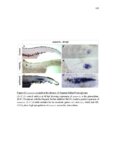
Show 147 notum1a mutants do not present evident gross morphology or lateral line defects We obtained the F2 generation fish carrying mutations for notum1a and confirmed their genotype by HRMA analysis. Incrosses of these fish produced healthy looking embryos. In general, these embryos developed without any evident defects until 5 days postfertilization. Yet we detected some embryos depicting a potential jaw and tail fin phenotype. Each of these defects was seen in about a quarter of embryos but they did not overlap, suggesting these could represent some random background mutation. Indeed, when we genotyped these embryos, they did not carry mutations for notum1a. Unfortunately, genotyped embryos homozygous mutants for notum1a did not have any evident phenotype. We decided to repeat this same incross, but this time we raised the progeny. By doing this, it would allow us to generate adult viable homozygous mutants, which could be incrossed. Having a homozygous mutant mother would abolish any maternal contribution that might cause a phenotype rescue. Unfortunately, when these fish reached adulthood, the fish refused to lay embryos. Therefore, we used an in vitro fertilization (IVF) method to obtain fertilized embryos. Once again our efforts came to no end as we found out that female homozygous mutant fish did not produce or carry any viable embryos. In the case of homozygous males, sperm samples were low but motile, low counts of sperm seemed to recover after a specially designed diet, but it did not restore female infertility. This summarized the experiments we had performed on the regulation of Wnt/βcatenin and Fgf signaling by notum1a in the lateral line. What we have learned with the tools currently available is that notum1a is a Wnt/β-catenin target gene in the primordium |