| OCR Text |
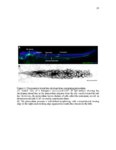
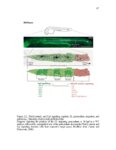
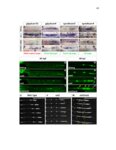
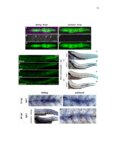
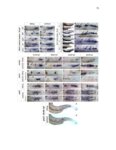
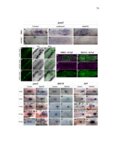
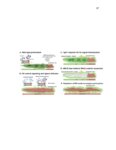
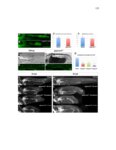
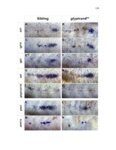
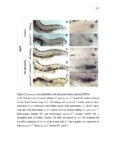
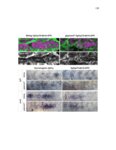
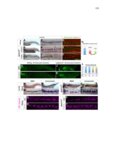
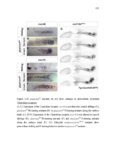
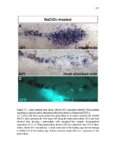
Show 108 convergence and extension movements (Topczewski et al., 2001; Venero Galanternik et al., 2015) and identified that it affects lateral line migration non-cell-autonomous by affecting the development of the myoseptum muscles. We also found that glypican4 might possess an autonomous role on Wnt/β-catenin/Fgf primordium feedback that is likely disguised by redundantly expressed HSPGs. Wnt/β-signaling/Fgf signaling in glypican4fr6 is redundantly regulated We show that mutations in the proteoglycan glypican4 result in severe truncation of the zebrafish lateral line migration. In more than 50% of mutant embryos, the primordium is not able to migrate normally along the fish trunk, tending to turn upon itself and migrate back toward the ear. However, our analysis also shows that the Wnt/βcatenin and Fgf signaling cues expressed in the primordium are not affected in these mutants, triggering a non-cell-autonomous migration phenotype due to the defective environment where the primordium migrates. Interestingly, a slight additive reduction in Heparan sulfates breaks the balance between Wnt/β-catenin and Fgf signaling confirming that glypican4 acts redundantly. Our findings are in agreement with previous analyses performed in the double extl3/ext2 mutants, where the gradual loss of Heparan sulfates leads to Wnt/β-catenin signaling expansion and Fgf signaling loss in a time dependent manner (Venero Galanternik et al., 2015). This result supports the necessity of Heparan sulfate modifications for primordium-autonomous signaling regulation. Importantly, it is possible that a distinct role for glypican4 in the lateral line may be masked by the compensatory influence of other HSPGs in glypican4 mutants, as shown by our suboptimal dose of Sodium Chlorate |