| OCR Text |
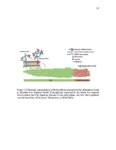
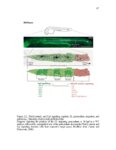
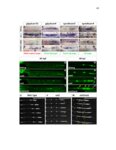
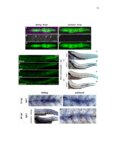
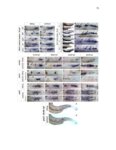
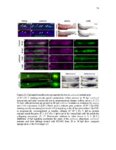
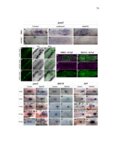
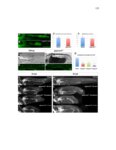
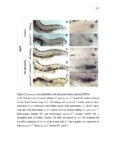
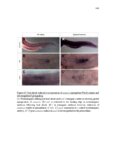
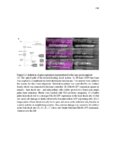
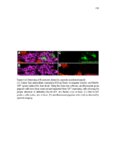
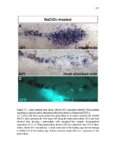
Show 51 primordium-expressed HSPGs an accessible experimental paradigm to dissect how multiple signaling pathways are coordinated and modulated to produce complex cellular behaviors and functional tissues. Mutations in ext genes affect Fgf signaling but not Wnt signal transduction in the primordium HSPGs consist of HS chains covalently attached to a core protein (Bernfield et al., 1999). Mouse and zebrafish ext mutants lack adequate levels of HS and possess serious developmental defects as a result of failed activation of signaling pathways, like Wnt and Fgf (Fischer et al., 2011; Norton et al., 2005; Shimokawa et al., 2011). Our results support the requirement of ext genes in Fgf signaling. However some studies proposed that HSPGs also affect Wnt signaling directly (Dhoot et al., 2001). Our study shows that in the prim Wnt signaling is secondarily affected due to loss of the Fgf dependent Wnt inhibitor dkk1b. Results supporting this interpretation are: (a) When we activate Fgf signaling in NaClO3-treated embryos, Wnt signaling is again restricted to the leading region, demonstrating that HS are not required for Wnt restriction (Figure 2.7K-L’). (b) When we downregulate Fgf signaling in 34 hpf extl3/ext2 mutants the expansion of lef1 and the onset of the phenotype is accelerated showing that loss of Fgf signaling is the primary cause of Wnt signaling expansion (Figure 2.6K-L’). Thus, our findings demonstrate that HS are not directly inhibiting Wnt signaling and they are not required to activate Wnt signaling during collective cell migration and prim development. In contrast, in Drosophila, HS enhance the interaction of the glypican Dally-like and the Wg ligand but the core protein by itself is also sufficient to interact |