| OCR Text |
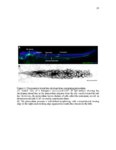
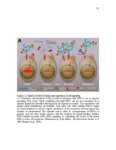
Show 2 Background The lateral line system of aquatic animals In order to orient in water, escape predators, find prey and participate in courtship, anamniote animals such as fish and amphibians rely on a mechanosensory group of organs positioned along their heads and trunks, called neuromasts (Metcalfe et al., 1985). These neuromasts are part of a sensory system called lateral line that can be subdivided into two key branches: the anterior lateral line that develops rostrally to the otic vesicle and covers the head of the animal; and the posterior lateral line which extends caudally to the otic vesicle along the animal trunk (Chitnis et al., 2012; Ghysen and DamblyChaudiere, 2007; Jankowski et al., 2009; Piotrowski and Baker, 2014). Historically, the first descriptions of lateral line organs are registered back to the seventeenth century. It took years before this system was associated to sensation of the environment (Piotrowski and Baker, 2014). Transplantation studies elegantly performed between two differently pigmented frog species as well as cell fate labeling studies in salamanders revealed that the origin of these lateral line neuromasts relies on the migration of placodes that leave behind the sensory neuromast along the animal’s body (Piotrowski and Baker, 2014). Lateral line neuromasts, the functional organs of the lateral line, are rosette-like clusters of cells with apico-basal polarity (Gompel et al., 2001; Hava et al., 2009; Lecaudey et al., 2008). They are composed of a group of sensory hair cells that stick their ciliary bundles out of the skin and respond to water movement. These sensory hair cells are surrounded by externally positioned support and mantle cells (Denk et al., 1989; Gompel et al., 2001). These neuromast hair cells are highly regenerative and, |