| OCR Text |
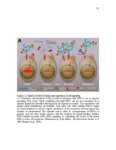
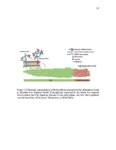
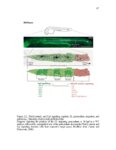
Show 17 al., 2002a). To date, modest but attractive progress has been made in understanding the impact of Notum inhibitory properties of Wnt/β-catenin signaling in Drosophila, zebrafish, planarians, Xenopus or mammalian cultured cells (Flowers et al., 2012; Giraldez et al., 2002b; Kakugawa et al., 2015; Petersen and Reddien, 2011; Torisu et al., 2008; Traister et al., 2008a; Zhang et al., 2015). The in vivo role of Notum in vertebrates is not that clear, as all previous studies describing Notum function have mainly been performed either in Drosophila or culture by using transfected mammalian cells and recombinant proteins. Until recently, it was widely accepted that Notum cleaved the GPI anchor of Glypicans, releasing them from the cell membrane and therefore shaping the Wnt gradient (Ayers et al., 2010; Traister et al., 2008b). The same function was proposed in cultured cells where NOTUM was shown to cleave not only the GPI-anchored HSPGs but also other GPI-anchored proteins, suggesting that its hydrolytic function was promiscuous rather than specific to glypicans (Traister et al., 2008a). Strikingly, two recent published studies performed in the Drosophila wing imaginal wing disc and cell culture have demonstrated that Notum has no enzymatic activity on the GPI anchor of Glypicans and have presented a novel scenario where Notum requires Glypicans to execute its inhibitory role over Wnt signaling. Notum is thought to bind to Glypicans to aid in colocalizing with Wnt ligands. Interestingly, the inhibitory function of Notum is achieved by removing an important palmitoleate group present in the Wnt ligands, leaving them unrecognizable by their respective receptor (Kakugawa et al., 2015; Zhang et al., 2015). I found that in zebrafish, notum1a is expressed in the migrating primordium under the control of Wnt/β-catenin signaling and |