| OCR Text |
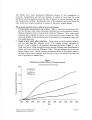
Show • Transportation costs. A mileage tax would increase the cost of private vehicle use in the Willamette Valley and decreases the overall amount of travel in the Valley. It would also shift more development outside of the Valley where there is no tax. This offsets some of the travel reductions within the Willamette Valley. Growth of areas outside the Willamette Valley is greatest for scenarios that restrict land supply and impose taxes in the Valley (Hybrid scenarios 1 and 2). Adding improved mobility further reinforces movement out of the Valley. In particular, the area south of the Willamette Valley in the 1-5 corridor would experience the greatest growth as a result of Hybrid scenarios 1 or 2. Transit ridership increases with increases in transit infrastructure, mileage taxes, and restrictions on highway expansion. Transit service as a percentage of total trips increases most significantly relative to strong investment in public transportation and mileage taxes. (Figure 6). Figure 6 Transit Travel 140% 120% - 100% " o c .2 80% o Q) (Transit Passenger Miles Traveled Per Capita) a. 60% " 40% 20% • 0% " No Action ' Compact s Highway Transit 'Tax "Hybrid 1 Hybrid 2 ' Hybrid 3 2000 2005 2010 2015 2020 2025 2030 2035 2040 2045 2050 Year Modeling Analysis of Willamette Valley Transportation/Land Use Alternatives June 2001 |