| OCR Text |
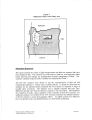
Show Trade Relationships. The input-output (I-O) model that describes trading relationships in the model area (see Appendix A) will not change over time. Although amounts of final and intermediate production are changed in response to economic growth, the amount that each sector consumes from each other as a proportion of its total production will not change. Shadow Prices. The relative differences among zones in public service quality, aesthetics and other factors that affect location choices (shadow prices) are assumed not to change. Although the relative attractiveness of places may change as a result of public or private actions, there is no way to assess how such actions would change the equivalent shadow prices Model Calibration Parameters. The various model calibration parameters will not change over time. Parameters like the monetary value people place on time they spend traveling are very important in modeling travel and location choices. The parameters used in the model are derived and calibrated from existing data. Land Use Assumptions The scenarios are based on alternative land use futures drawn from two other studies. Historical Trend. The No Action, Highway Emphasis, Transit Emphasis, Mileage Tax Emphasis and Hybrid 3 scenarios are based on the Historical Trend land use scenario developed for the WVAF study. The WVAF prepared a map of developed lands in the year 2050 to represent theHistoric Trend. Plan Trend. The Compact Development Emphasis, Hybrid 1 and Hybrid 2 scenarios are based on the Plan Trend land use scenario developed by the PNWERC. The PNWERC prepared a series of maps of land use and land cover at 10-year intervals between 1990 and 2050 to represent thsPlan Trend. Since land use policy is an important input to the statewide model, it is necessary to provide estimates in the base year of the amount of land on which development is allowed by comprehensive plans. It is also necessary to estimate at each 5-year increment how much land is added to the base year (2000) amount. The WVAF and PNWERC studies provided assumptions of what is actually developed and not what is allowed to be developed. Because Oregon law requires that a 20-year supply of land be maintained within urban growth boundaries, it was assumed that additional land will be zoned at each five-year interval to maintain the required supply. Differences in how lands were mapped by the two studies required some conversions that are explained in Appendix A. Transportation Assumptions Different assumptions were made for the different alternative scenarios. Modeling Analysis of Willamette Valley 5 June 2001 Transportation/Land Use Alternatives |