| OCR Text |
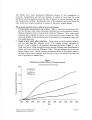
Show The hybrids show more pronounced differences because of the combinations of economic, transportation and land use elements. It should be noted that the model distributed a fixed population around the state in response to various economic, land use and transportation variables. Realistically, some of the population that moved within the state would leave Oregon completely in response to the policy variables applied. Where people and jobs locate is affected by several elements: ¦ Transportation improvements and location. Highway expansion decentralizes both jobs and housing, while transit expansion centralizes jobs and decentralizes housing. Highway expansion tends to keep growth within the Willamette Valley, while transit expansion and a mileage tax tend to move some growth to areas outside the Valley. Increased mobility by any mode increases the population of metropolitan fringe areas and neighboring cities. ¦ Supply of land, which affects land price. Strong urban growth boundaries influence land use more than they influence travel. The Compact scenario constrains the amount of land available to development, increasing land prices (Figure 5). As a result, land prices within metropolitan areas increase, directing more development to smaller cities and outside the Willamette Valley. This also increases city-to-city and longer distance travel. Hybrid scenarios increase the effects of the compact scenario -the push of land prices combined with thepull of city-to-city mobility increases the shift of population to smaller cities. Figure 5 Residential Land Price Effects of Compact Scenario Compared with No Action Scenario 20% i 2000 2005 2040 2045 2050 Modeling Analysis of Willamette Valley Transportation/Land Use Alternatives 10 June 2001 |