| OCR Text |
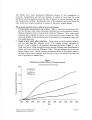
Show • Frequent commuter rail service would be provided between McMinnville and Milwaukie (where it connects with light rail); between Salem, Wilsonville and Beaverton; and between Canby and Portland. Mileage Tax (Transportation Demand Management) Emphasis Scenario. This scenario is intended to illustrate the effects of a major program to reduce travel demand by increasing transportation costs. This was simulated by assuming an extra 20^ per mile cost for driving on roads in the Willamette Valley. For passenger cars, this would be about a 40 percent increase in the total cost of driving as of the end of 199§. MODELING RESULTS Evaluation Measures To focus the outputs from the statewide model, the WVFATF Steering Committee identified the following evaluation measures: • Distribution of growth in households within the Willamette Valley and surrounding regions • Distribution of growth in jobs within the Willamette Valley and surrounding regions • Changes in per capita passenger and vehicle miles traveled in the Willamette Valley • Changes in per capita passenger and vehicle hours traveled in the Willamette Valley • Changes in passenger and vehicle travel times in the Willamette Valley • Changes in auto and truck speeds on urban and rural freeways and arterials in the Willamette Valley • Changes in auto travel times between selected Willamette Valley cities • Emissions from vehicles in motion in the Willamette Valley • Changes in residential and industrial/commercial land prices in the Willamette Valley Modeling Results for Alternative Scenarios A summary of the modeling results for the different scenarios is presented below. Detailed comparative data on the model results are included in Appendix B. Congestion will increase and vehicle miles traveled per person will decrease. An assumption in the model is that the Willamette Valley population will double by 2050. With this projected population increase, even if major investments were made in highways and public transit, travel delay and traffic congestion will increase. Passenger vehicle miles traveled decreases for all scenarios as a result of this increased congestion. Even so, the transportation policies chosen today can make a difference in just how the transportation system works in the years ahead (Figure 2). For example, the increase in travel time is significantly less for the three hybrids. 7 According to an October 11, 1999 press release by the American Automobile Association, the total costs of driving a mid-size car in western states is 49 cents per mile. This includes all ownership and operating costs. Modeling Analysis of Willamette Valley 7 June 2001 Transportation/Land Use Alternatives |