| OCR Text |
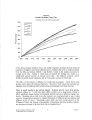
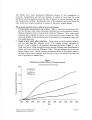
Show Figure 2 Average Passenger Travel Time (Passenger Hours per 1000 Passenger Miles) 80% i 70% 60% jj? 50% ¦ .c o ' No Action "Compact * Highway Transit 'Tax 'Hybrid 1 Hybrid 2 ' Hybrid 3 2000 2005 2010 2015 2020 2025 2030 2035 2040 2045 2050 Year Of the policy choices modeled, city-to-city traffic congestion increases the least when the expansion of highway and transit infrastructure is coupled with taxes to reduce demand. Over the fifty-year period, Hybrid 1 and Hybrid 2 result in the smallest increases in average travel time. Hybrid 3, which does not include the mileage tax, results in a significantly greater increase in average travel time. The Highway scenario, which includes no public transit expansion, has an even greater increase in travel time. The effect of the policies is different for trucks than passengers. Truck travel times increase more under all scenarios (Figure 3). Moreover, truck travel time increases are mitigated more by highway improvements than are passenger travel time increases. There is much inertia in the current system. Regional growth varies little among scenarios (Figure 4). It will take major shifts in policy over a long period of time to effect significant change because development patterns and travel behavior change very slowly. Modeling shows that, even after projects are constructed and in use, it takes years for transportation projects to manifest themselves in different land use patterns and different levels of travel. Substantial policy shifts can alter overall growth of the Willamette Valley, but because of geographic circumstances and local policies, impacts are seen more strongly at the local level than at a regional level. Modeling Analysis of Willamette Valley Transportation/Land Use Alternatives June 2001 |