| OCR Text |
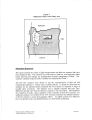
Show MODELING ANALYSIS OF WILLAMETTE VALLEY TRANSPORTATION AND LAND USE ALTERNATIVES INTRODUCTION The Willamette Valley Livability Forum facilitated and coordinated a long-range, comprehensive, regional look at the future of land use and transportation in Oregon's Willamette Valley. As part of this effort, state-of-the-art integrated land use and transportation modeling methods were applied to the study of this large regio^ This analysis will help decision-makers better understand the interdependence and interactions of future land use, economic and transportation alternatives. This report provides a summary of the modeling analysis for the Willamette Valley transportation and land use alternatives considered. The report is composed of three sections: • A background of the study and alternative scenarios considered • A description of modeling assumptions • A summary of modeling results to date Appendix A includes a description of the Statewide Model, including a brief description of the theoretical basis of the model, the mechanics of how the model works, and a description of model calibration and testing. Additional information and detailed graphs of modeling results is included in Appendix B. Appendix C lists the members of review and oversight committees for this first application of the statewide model. PURPOSE AND BACKGROUND Purpose The Willamette Valley Livability Forum is a voluntary organization of local governments, metropolitan planning organizations (MPOs), business and citizen groups, and state agencies. It was formed to promote dialog and recommend action on regional land use and transportation issues. In 1999, the Forum initiated a long-range, comprehensive, regional look at the future of land use and transportation in the Willamette Valley. This effort brings together three innovative analytical modeling 1 The Willamette River Basin has an estimated area of 11,500 square miles. It contains three metropolitan areas and more than 100 cities. About 70 percent of Oregon's population and 75 percent of the state's employment is located in the area. Modeling Analysis of Willamette Valley 1 June 2001 Transportation/Land Use Alternatives |