| OCR Text |
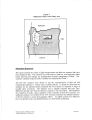
Show efforts. The leaders of these studies are partners in the Willamette Valley Livability Forum project. The modeling efforts include: • Modeling of environmental effects of alternative land use futures by the Pacific Northwest Ecosystem Research Consortium (PNWERC^ • Modeling of economic effects of alternative land use futures on the farming and forestry industries and public infrastructure by the Willamette Valley Alternative Futures (WVAF) project • Modeling of economic, land use and transportation effects of alternative land use and transportation policies by the Oregon Department of Transportation (ODOT) Background The ODOT modeling project involves the application of the recently developed statewide transportation and land use model (statewide model). This project, titled Alternative Transportation Futures (ATF), was funded by a Transportation and Community System Preservation (TCSP) grant from the U.S. Department of Transportation. Direction for development of scenarios to be modeled was provided by an ATF Steering Committee (Appendix C). In 1996, ODOT, in collaboration with its federal, MPO and state agency partners, started the development of the statewide model as part of its Transportation and Land Use Model Integration Project (TLUMIP). This consortium of agencies and jurisdictions formed the Oregon Modeling Steering Committee (OMSC) to guide development and implementation of modeling in Oregon. A subcommittee of the OMSC, the Statewide Model Application Project (SMAP), provided oversight and recommendations on application of the statewide model (see Appendix C). The statewide model integrates modeling of economic, land use and transportation interactions in Oregon and Clark County, Washington. This is the first time that an area the size of the Willamette Valley has been modeled to objectively evaluate the interactions of these dynamic elements. It is also the first full application of the statewide model. Information on the performance of the model will be used to improve and expand future model capabilities. The Willamette Valley Forum study area is shown on Figure 1. Although analysis focused on the Willamette Valley, results from policy actions in the Valley were documented throughout the state and in Clark County. 2 The Pacific Northwest Ecosystem Research Consortium consists of the U.S. Environmental Protection Agency, Oregon State University, University of Oregon, and University of Washington. This project has developed three plausible land use futures for the Willamette Valley for the year 2050 and has evaluated them in terms of ecosystem impacts and the economic pressure on water resources. 3 The Willamette Valley Alternative Futures project is a collaborative research study coordinated by the 1000 Friends of Oregon. It is governed by a Steering Committee with representatives of nonprofit organizations representing agriculture, timber producers, woodlot owners, homebuilders, conservationists, and others. This project is funded by grants from the Hewlett, Compton, Lamb, Bullitt, and Oregon Community Foundations. The project has estimated the long-term consequences of two alternative land use futures for the Willamette Valley on farm and forest productivity and the cost of urban services. Modeling Analysis of Willamette Valley 2 June 2001 Transportation/Land Use Alternatives |