| OCR Text |
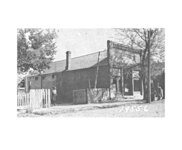
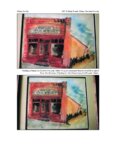
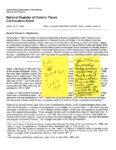
Show Utah Centennial History Suite of the ZCMI, retail cooperatives were operating in Manti and Ephraim within months of the inception of the program in Salt Lake City.4 Eventually, nearly every town in the county had at least one cooperative, and some had several. Orson Hyde reported on 5 October 1869 that all mercantile establishments in the county were cooperatives and that all were doing well. Institutionalized cooperatives swept the popular imagination, and it appears that all residents of the county were members or stockholders in one or more cooperatives-cattle, sheep, tanning, coopering, milling, irrigating, and retailing. Peter Madsen of Ephraim had stock at one time or another in six different cooperatives. "The rule," Madsen said, "was cooperations in every thing."5 Manufacturing was also made possible on a cooperative basis, in fulfillment of a long-felt need. "Come, Capitalists, this county abounds with wealth," David Candland called out from Manti in 1863, in a plea for the development of manufacturing. Perhaps the most successful manufacturing enterprise was an elaborate furniture factory at Ephraim run perhaps by the Danes, who were so prevalent in that community, and for whom the creation of fine furniture has been a proud national tradition. In 1869 the Ephraim correspondent for the Deseret News reported that "the people have an excellent furniture shop, doing a good business, some specimens of work, especially several centre tables, being elegant in design and finish." He also reported, even more ecstatically, that "one of the brethren at Ephraim had cast and bored a brass cannon, which is a superior piece of ordnance. "6 During the earl ears of the coo eratives it was rimar' the retail stores that reported pro ItS. . e Manti store pal a lvidend "that gave general satisfaction" as early as July 1869. The store at Fountain Green paid dividends of 68 percent in 1870. The Gunnison store paid $3.00 per quarter on each $5 .00 share during its first three quarters. 7 Other kinds of cooperatives were successful. Philip Hurst, who ran the Fairview Sheep Cooperative, records in 1884 that their stock was worth 200 percent if all accounts were paid up. Even with the accounts unpaid, the stock was still 100 percent or face value. It was an aggressive business. Hurst wrote that he had traveled more that 1,000 miles by railroad, and had taken several long trips by horseback in the interests of the cooperative. The year 1886 was an especially good year for the cooperative movement in Fairview. The Sheep Cooperative that year declared a dividend of 33 percent, while the mercantile store paid 15 percent, besides investing $4,000 in a new grist mill.8 Such stories of success, however, proved to be the exception. Where a few were as eminently successful as noted and managed a long survival, the sad tale is that failure was more common. The story of the Manti Cooperative Store was typical. "The first six months were slow," H. J. Hals wrote, "because of the shortage of money among the people. When we took stock the rent was a little over $100.00 and the last six months it went a little better than the beginning. Each received $300 in shares as interest and all goods were set to lower prices." By 1876 the store seemed to be in fairly good condition, and J. C. A. Weibye gave the following figures for the store that year: "Each share was $10.00, each share earned $1.24 in interest for 1875; there was a total of 1,246 shares; total capital was $12,480; total stock on hand was worth $6,169." The store was weakened in 1878 when it decided to absorb the financially ailing Ladies' Cooperative Store. Even more serious was the decline in enthusiasm for the cooperative ideal in the Copyright Historical Views, 19993 |