| OCR Text |
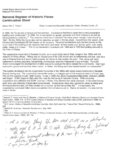
Show U-\G\ ~ S Vl l ~ J AVli-re ,~ <>/-- AlII"" D ((J/;.ub / j Ce,,-kYlrH~~ )'\ I b~T Q;~ 7 ~OUfl~ £COIl0vwIC5 H,s f- ~ !Jo/M.WMC-t.J1 ~~ ;l ~_ -{M'--F7(.F Q, /"> 1_ Aultv;j·osUtah Centennial History Suite " . /21 - (.3 z V The Cooperative Movement The theocratic economic system that prevailed in the county during its nineteenth-century developmental period was a combination of traditional American capitalism and Mormon-organized cooperation. At times forms of religious communalism, highlighted by the establishment of the United Order in 1874, were attempted as a substitute for capitalism. The purpose of the communal experiments was to distribute more equally the collective resources among the entire populace, rather than ~rery on the more self-interested methods of capitalism, to provide for everyone's needs. While limited cooperation, especially the tithing, ZCMI, and public works programs, succeeded during the formative decades in driving growth and development, the more idealistic, demanding communal experiments failed. Central to the success of the_Mormon cooperative economic system, beginning in the 1850s, was a network of tithing offices or bishops storehouses. These collection facilities were built territory-WIde, mcIudmg most of Sanpete's settlements. As late as the early twentieth century, tithing offices were built in the county, including the fine ones dating from 1905-1908 and still extant in Manti, Ephraim, Spring City, Fairview, and Fountain Green. In 1908 tithing "in kind" was discontinued, and storage houses were no longer constructed. But during the previous half-century, tithing was voluntarily contributed in the form of cash, livestock, produce, or labor. As early as 1850, the first settlers of Sanpete Valley were counseled to use their tithed labor to build "a state road and a bridge." 1 It was expected that faithful LDS church members would give 10 percent of their gross incomes, although records show that the consistency of payment varied widely, necessitating ecclesiastical reminders and even levies or assessments when income flagged and the economy became sluggish. In order to fmance the LDS church's planned public works projects in 1851, a resolution was adopted at the Mormon general conference requiring members to give a tenth of the value of the property they owned at the time. Later institutional tithing levies also were imposed on the profits of commercial shops, businesses and factories. The tithing was collected locally, and as surpluses accumulated, shipments were sent to the large General Tithing Office in Salt Lake City. In 1857, for example, Sanpeters sent a caravan consisting of 1,562 pounds of lead plus foodstuffs including 1,940 bushels of flour, 1,196 bushels of oats, and 21 bushels ofbarley.2 During the Mormon Reformation of 1855-56, members were asked to "consecrate" or donate to the church all of their property, cash and goods. Upon receiving an accounting showing the appraised value of all items given, local leaders "gave back" what they considered the donor needed to maintain his household and occupation, retaining the excess to be used for church purposes or given to the less fortunate. In this manner, public projects such as meetinghouses, schools, courthouses, roads, and irrigation canals were erected. In the same manner, new immigrants and the financially disadvantaged were cared for. Although the church-sponsored economic system was of great significance to the growth and stability of the county, especially in its early decades, free market capitalism ~ominat~ daily economic life. Families and individuals were responsible for developing [j Copyright Historical Views, 19991 |