| OCR Text |
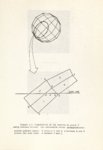
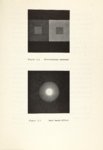
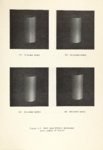
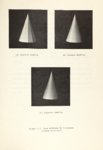
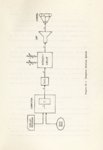
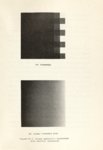
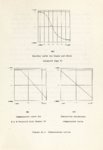
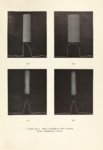
Show 85 the case the incident light energy received by this material. of of transparency) a a .photographic material be linearly proportional to . possible. However; In it is known that the incident energy E is the value n, and in photography, the density D is defined o where of Ir· is the It then the is ratio following The of . done in several the This initial material one minutes. greyscale are a curve I light to 'can be obtained the cut-off of the dark is then after room the recorded The' values of adjusted From the and. representation b of the scope is When the initial phosphor of the' A1.2a), incident of the more adjusted relected light R, sensibility function empirically less or In brightness is well a so screen similar densities c, the t-stops maximal' that a and the of the use dynamic for each square with camera of the range with: stepwedge dispayed the screen. adjusted, This is on a the Gamma a the Gamma film requires the exposure of the D.A.C., the can be obtained, compensation stepwedge like corr ection.: which and lens capabilities of greyscale a material photographic a on value zero a the eye acclimate to the darkness for letting on that so image intensity called stepwedge· in Figure A1.2a is displayed compensation. time as: by plotting the density image against the logarithm Such' a brightness completely a linear function of a way: corresponds z the possible to have photographic k· n.ot log (Ir) between of the incident energy. the = this practice are (Figure measured with 8., densitometer and their values plotted against the corresponding values of log (n), A curve scheme or is. a then fitted to this set of polynomial function fitting. points by using A such density either curve a for the spline fitting. black and |