| OCR Text |
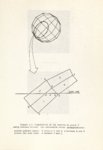
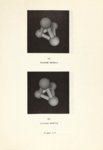
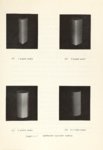
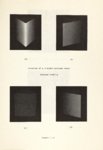
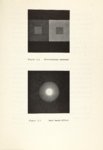
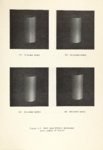
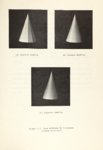
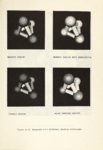
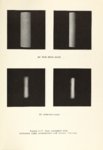
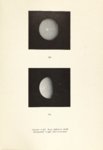
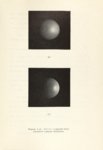
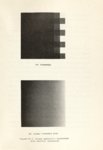
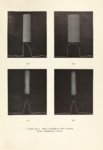
Show 10 . To solve represent of these some curved surfaces. of the surface for each the I surface; When the 1.3 the From surface is gives the entire shading technique and of the and surface, reflection of is light most the cases difference arise work done at From observations highlights not are of reflection light of case only created from other diagram objects made Newell's model, curved surfaces source depends of on can be surface, a continous gradation the on smooth Gouraud smoothness the of will be specular the light [20] ideas some found they source, but This is later. discussed especially true in are approximated with planar polygons. Unfortunately, the shading Since function for every respect to the light source that the highly reflective and transparent materials. the on by also of arbitrarily located, of appearance simulation world, scene. the orientation of the polygon with sight. the point when real the in the Figure on a still disturbs problems directly by objects and retained. Utah, Newell, Newell, and Sancha in of vertex However with Gouraud's method, the additional. problems These gives The Computer-Aided Design Centre in Cambridge, England, presented creating highlights. to way linearly interpolated along between edges attempted. each restores the smooth of shade at the Independent of the line is intensity the previous methods. subjective discontinuity new a intensity is computed This very simple method surface, which in the light this shade 1.4 and 1.5 show Figures the shade a example of the determination of the shade at an over at the curvature, displayed, the Gouraud method. shade Gouraud keeps this information at between adjacent pairs of vertices of the object. edg using introduced Instead of having the information about the curvature facet, the problems, Gouraud [19] In the polygon and the ability to generate highlights using either |