| OCR Text |
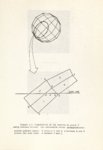
Show 40 N=P 1 P2/\P2P3+P2P3/\P3P4+P3P4/\P4P5+P4P5/\P5P6+P5P6/\P6P 1 +P6P 1 /\P 1 P2 If by . 0 is the substituting N'=OP 1 polygon P1P2=OP2-0Pl,· P2P3=OP3-0P2, technique coordinate system. the same for onto the three in components The computing the etc., be can and normal to simplified each of on areas these terms of the normal to the polygon. cross-products, but it is is and planes (4.2) ' to, project of (Oz.Ox) are This method is more have: will, we polygon a principal planes (Ox.Oy), (Oy.Oz), projected the method of as previous expression /\OP2+0P2/\OP3+0P3/\OP4+0P4/\OP5+0P5/\OP6+0P6/\OP 1 Another the coordinate origin, the (4.1) the three the mathematically economical in computation time. Once the normals to all the polygons they are to the are added polygons sharing added influence normalization averaging the the can vertex done normal to each of the surrounding influence than polygons. of of each of the by giving a length to each normal In the latter case, that a vertex. edges The fewer or of average of the polygons with they unit length, the number of an before will not have any polygon at computed, If the normals this vertex. normal polygon by dividing by are by each. normal edges have many-edged polygons. If the normals to the length area direction either vertex a normalized to have unit individual resulting be' are assighed to In the first case, the normal at the vertex is polygon. more a the together, over and the result is together surrounding normal is polygons proportional are to the not area normalized, of the then polygon, large because area the, polygons, |