| OCR Text |
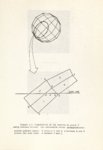
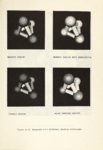
Show 41 will exert influence more on the orientation of the approximated normal each at vertex. In the from the where the normal to the surface at case edges which terminate cross-products of these edges. at In the the vertex, a vertex is approximated. the normal is the of the sum example in Figure 4.3, the normal at vertex PO is: NO=POP 1 /\POP3+POP3/\POP5+POP5/\POP7 +POP7 /\POPl . In that case, the length of edge an is the (4.;:?) principal factor determining the orientation of the normal at the vertex. The difference of shade in the resulting picture due to using different . . techniques to Gour aud even "guessing," obtained normal IV. 2 . approximate suggested [19] and he showed the to be Normal at a that adequate for point the the at a point edge. An a on example linear is vertex is nearly unnoticeable. result was be not much different any scheme used of can to done by from: that approximate the of the object shading. the surface. on can the surface of interpolation a approximated be now The normal to the surface at is the result of each computation It is necessary methods. edges ,and the Therefore, The normal at each vertex previous at that the determination of the normal using other techniques. seems normal by either one to define the normal to the surf ace a along polygon. point along the edge of a polygonal model to the normals at the two vertices of surf ace at given in Figure 4.4: the normal Nt to the a that point |