| OCR Text |
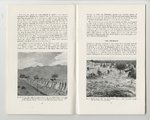
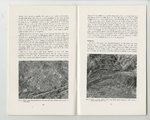
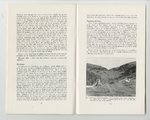
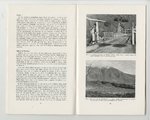
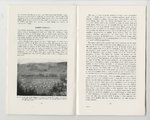
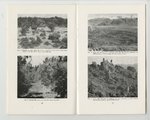
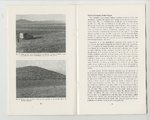
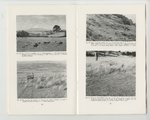
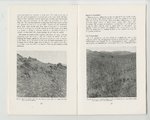
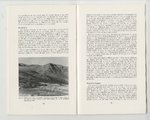
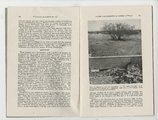
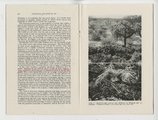
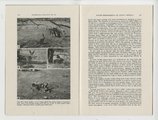
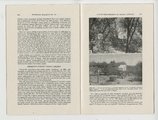
Show their burrows for days at a time, and Thompson and Worden10 report one that was known to be "lying up" for eleven days. Perhaps they exist on stored body fat. Reingestion of their faeces, that is, the eating of soft pellets taken directly from their own anus", is a common phenomenon of rabbits and hares that replaces, to some extent, the function of rumination in sheep. RABBIT HABITAT The rabbit's immediate surroundings, which constitute its habitat, must satisfy certain environmental conditions (Fig. 10). Although these conditions cover a broad range, the principal factors governing the distribution of rabbits and their density appear to be the type of food and cover available. Rabbits do not thrive well in tall, dense grass; instead, they require bare soil or turf. Even though rabbits apparently eat a wide variety of plants, they close-crop nearly all of them, seeming to prefer the growing tips close to the ground surface. Sheep crop grass to a height at which it can be readily eaten by rabbits. Rabbits thrive best where they can maintain plenty of bare soil, sand, or nearly year-round turf conditions. In other words, the more burned or depleted are tussocks or other kinds of vegetation, the more suitable such areas become for rabbits. Once the soil is exposed, frost heaving then often assists rabbits in keeping such areas bare. The type of cover or shelter needed by rabbits varies considerably (Fig. 11). Good vegetative cover includes scattered stands of gorse, manuka, matagauri, tauhinu (Cassinia spp.), Dracophyllum, and to a lesser extent, lupin (Fig. 12). Broom and bracken fern are used less frequently. Good cover is also provided by edges of native bush and exotic forest. When cover is not available the soil must be loose and well drained so as to be suitable for burrowing. Heavy, poorly drained soils are quite unsuitable for this purpose. Examples exist in the North Island where the removal of scrub from such soils results in the almost complete disappearance of rabbits. River bottoms (Fig. 13), river terraces, limestone outcroppings, and other rocky areas are often attractive to rabbits. In the latter areas it is more difficult to keep rabbit densities in check merely by encouraging dense grass (Fig. 14-), although such growth still helps appreciably. The more unfavourable weather and other conditions are for plant growth, the more easily rabbits can create additional bare soil or turflike conditions, and hence enlarge the area of suitable habitat. It is probably much easier for rabbits to maintain a suitable habitat where the principal forage consists of annual plants rather than perennials. Most of Australia's rabbit problem is found where the forage is predominantly annuals. The better the weather, soil texture, and soil fertility are for grass growth, the more difficult it becomes for rabbits to get "on top of" the vegetation and maintain it as good rabbit habitat, i.e., bare or turf-like. On the more productive and topdressed sites, the lush grass, if once given a chance to get ahead of the rabbits, grOWS too rapidly for them to keep cut short. In all instances where a healthy growth of herbaceous vegetation has been obtained, rabbits alone cannot take over quickly. The rabbit's rate of increase, which is determined by the degree of survival of the young, and is not necessarily a consequence of large and frequent litters, is never as great on well vegetated land as it is on bare soil or where moss and lichen are the principal ground cover. The question is often raised - Why do rabbits prefer sunny faces? I believe that the most probable answer is that the dark faces seldom provide suitable habitat conditions and that rabbits are more often on the warm, "sweeter" faces not to keep themselves warm but because they find more bare ground there. Sheep like sunny faces, thus making them more attractive to rabbits. Some vegetation grows more lush on the dark, "sour" faces because there is more moisture. Also, fires were probably less destructive to tussocks on the shady, moist slopes. There are, however, numerous examples where rabbits occur on shady faces. In these instances, it is because the habitat is suitable ,- there is good cover and some bare ground, which I assume is what attracted the FIG. 10: Sunny and rocky hillsides with gorse are good rabbit habitat. It requires very little effort in rabbit control to prevent the establishment of warrens in cultivated fields. rabbits. It is unlikely that the rabbits moved in and then created a suitable habitat. 16 1:7,: Inset 2 |