| OCR Text |
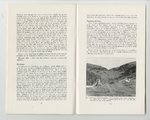
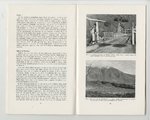
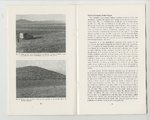
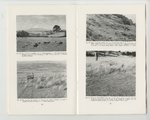
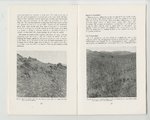
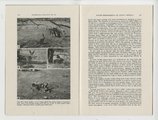
Show Cycles In the northern hemisphere many kinds of animals, including most types of rabbits and hares, experience periodic fluctuations in density. Sometimes these variations in numbers seem to occur in fairly regular cycles and at other times the periodicity of such fluctuations in numbers. is quite irregular. Wodzickis and Whittle8 indicate for New Zealand that peak rabbit densities have occurred about 116 and 14 years apart. It will probably be difficult to determine future fluctuations because so much artifiicial control is directed at the rabbit. However, there probably will be opportunities of observing this phenomenon in hares. It is not known to what extent food supply, crowding, disease, and other factors influence periodic fluctuations in actual or potential rabbit densities. It would be useful to know more about cycles in rabbits so that need for increased control measures during "peak" years might be anticipated. Several declining rabbit populations in New Zealand in locations that have become more densely grassed have been demonstrated to be characterised by a scarcity of young individualsf'. Survival of kittens seems to be more important than rate of breeding in determining rabbit numbers. Effects of Weather Rabbits do not mind light rain, but seek cover immediately if there is heavy rain. An experiment at Animal Ecology Section, Department of Scientific and Industrial Research, indicated that it was necessary to rub the fur of a rabbit immersed in water in order to get the animal really wet. However, prolonged exposure to rain can apparently be fatal, particularly in the case of kittens, which are also likely to perish when stops in badly drained ground become wet, or when stops and burrows are flooded. Although adult rabbits are good swimmers, they usually do not enter deep water unless driven, and often cannot even be driven (Fig. 8). However, there are a number of reports of people in New Zealand' witnessing rabbits swimming in rivers. Considering the way rabbits scamper about on steep river banks, it seems quite likely that many FIG. 8: A rabbit-proof gate on Mohaka River bridge. Only a small number of rabbits manage to swim across large rivers. individuals may accidentally fall into rivers. Possibly some young adults which have left home to seek "greener pastures" voluntarily enter water. There have even been a few reports that a number of rabbits have emigrated together across rivers. In New Zealand rabbits live in mountains above 5,000 ft. where food and cover is suitable and bare ground is present, but the principal concentrations have usually been under 3,000 ft. Cold weather by itself is probably not a factor that limits the distribution of rabbits as they can withstand much colder temperatures than are found in New Zealand. They do not seem to thrive well in areas of heavy rainfall, especially if it exceeds 80 or 100 in. a year. The heavier the rainfall, the better drained must be the soil to be suitable for rabbits. They also want good Shelter from strong winds (Fig. 9), particularly when the winds are accompanied with rain or snow. Rabbits somehow can remain within FIG. 9: The area in the foreground is a good rabbit habitat since it provides bareness, gorse shelter, and good drainage for burrows. 14 15 |