| OCR Text |
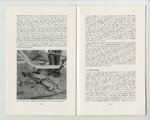
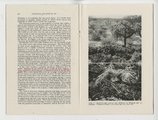
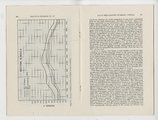
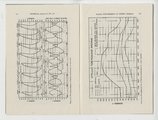
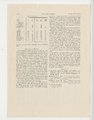
Show individuals have been poisoned; its daily and seasonal feeding habits and acceptance of different kinds of baits; the factors responsible for the presumed high juvenile mortality in tall grass ; the degree of palatability of tall, rank forage; and such questions as what rabbits do while in their burrows, which could be determined by means of observations in glass- sided, dirt-filled cages. In spite of these deficiencies, much information is on hand and other answers are in the process of being ascertained. The question of how inbreeding may affect rabbit populations is often raised. Frankly, I see no way that it‘ can becom e an important factor. Close inbreeding~ matings between parents and offspring. or between siblings, will occur occasionally, but this is also suspected as being a common phenomenon of wild animals. The amoun t of close inbreeding inla rabbit population cannot compare with that obtained in domestic ammals. LIFE HISTORY OF THE RABBIT The life cycle of the European rabbit in New Zealand has been studied by Watson4' 5, and is as follows. The naked and blind young are nearly always born in a small closed burrow called a stop: the doe digs open the burrow once each night to nurse the kittens, The juveniles emerge above ground when three weeks old. Females mature sexually at about five months of age and males at about nine. The main breeding season is June to November in North Island and a month or so later in South Island. Even though pregnant females can often be found every month of the year, the offspring of these off-season breeders do not contribute appreciably to the density of the general population. During the main breeding periods, litters are often produced in quick succession with a high proportion of females being pregnant while still nursing a previous litter. Gestation lasts about four weeks. It is quite likely that under good conditions many females have produced twenty-five or more young in one year, but most of these kittens do not live long enough to breed. The average litter size is five although, rarely, as many as twelve embryos have been recorded. Bull6 has shown that at least one parasite, liver coccidia, is sometimes an important mortality factor in juvenile rabbits. Burrows Rabbits often, but not always, live in burrows, which sometimes have small and inconspicuous escape exits called "pop" holes. They are not inclined to do much digging where other cover is available and individuals seldom dig elaborate burrows. Rabbi ts are very sociabfe and generally occupy old established warrens, where many of the holes are inter connected by a system of tunnels. Does sometimes make their stops within the warren and these when vacated by the young become part of the warren and help to enlarge it. However, rabbit s are quite capable of expanding warrens or, over a period of years, digging new ones when the need arises. Their digging habits are quite similar in these respects to populations of ground squirrels in California which, for the most part. also live for years in the same burrow systems. i I Scratches The significance of rabbit scratchings is not understood. Only a relatively small proportion of scratches can be attri buted to searc hing for food or looking for a place to dig a burro w. In most instances, after The rabbit is not to be confused with the hare, which has also been introduced into New Zealand. The jack rabbits and snowshoe rabbits of America are really hares, but the American cottontail is a rabbit, a near relative of the European rabbit. Hares have fewer litters than rabbits. In contrast to rabbits, they do not require as much cover in the form of scrub or rock and they thrive in taller grass. Their precocious young are born on top of the ground, furred and with eyes open. When the habitat conditions become unsuitable to rabbits because of dense grass, the hares may increase in number. Hares are not as gregarious as rabbits and they will never become as numerous, but they will at times be an economic pest in New Zealand. The hare, which has large hind legs, travels greater distances than the rabbit in its-daily activities. With present techniques, the extermination of hares will be difficult. In areas of intense farming where paddocks have been seeded and topdressed, the hare is more of a potential, or real, nuisance in destroying forage than either the rabbit or Australian* possum. The possum is likely to become an economic pest around gardens, orchards, and in some forests, but it will never be a serious grassland pest. *The Australians have named this-animal the possum to distinguish it from the American opossum, an entirely different animal. 8 9 Inset l |