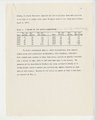
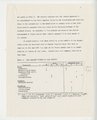
| OCR Text |
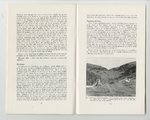
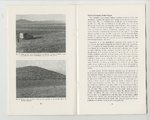
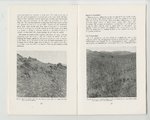
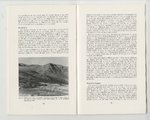
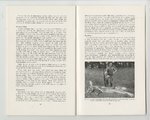
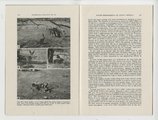
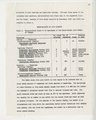
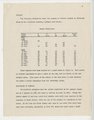
Show However, even though they may tend to reduce slightly the general carrying capacity of rabbits in any area, they are much less important as an unfavourable factor of the habitat than tall grass, as will be discussed in the chapter on habitat. Rabbits themselves are more likely to exert a greater check on their total number than do predators, for rabbits can eat themselves out of house and home. Actually, it is other conditions of the habitat, such as food and cover" that govern the basic density of rabbits present; the more rabbits the area will support the more predators there will be. Rabbits are more likely to determine the density of predators than predators are likely to govern the density of rabbits. If predators were able to reduce significantly the numbers of their prey, they would then eat themselves out of a food supply. As the reproductive powers of prey species are greater than those of their predators, something other than predators must check the increase of animals like rabbits. Rabbits' worst enemies are usually tall grass or too many other rabbits depleting the food supply. A greater diversity in predators would probably lower the carrying capacity for rabbits to some extent, but they still could not keep rabbits from becoming an economic pest where other conditions were right. When the cover is less suitable for rabbits (Fig. 6) they are more vulnerable to predation, and the natural enemies can become more significant in further reducing the "basic" carrying capacity of that area for rabbits. When a dense population of rabbits has been brought under control, predators can be temporarily useful in further reducing the numbers. long before the population density has increased to the stage where the maXImum carrying capacity of the area for rabbits has been reached. Population Build-up . 'Dense rabbit populations usually build up by first passing through an initial phase of slow increase that is followed by a period of rapid build-up. Most rabbit-control operations in New Zealand now, fortunately. reduce the number of rabbits to such a low level that the stage of rapid build-up following control is not reached for at least several years, and sometimes much longer (Fig. 7). This even occurs in areas where the habitat is still fairly suitable for rabbits, that is. warrens and bare ground are present, but in these areas it will happen only if the percentage of rabbits destroyed is quite high, probably in the nineties. Because of this characteristic pattern of slow followed by rapid rate of increase in density, it is necessary to reduce rabbit numbers to a suffi- ciently low level so as to fall into the initial phase of slow build-up before they are controlled, otherwise they are only harvested. This provides time for the forage to grow and get ahead of the rabbits which then reduces the attractiveness of the habitat. J Because of the low survival rate of the kittens there is no possibility of a pair of Wild rabbits even in the most favourable habitat having even a thousand descendants in a year or two. However, after a short time the predators themselves become less numerous. Movements According to Tyndale-Biscoe and Williams', adult rabbits, that is, those that have become established and bred in one area, are not prone to move more than about 100 yards from home. Adults are quite stationary and it is difficult to get them to leave their home locality regardless of how much they are dogged, shot at, or otherwise disturbed. This is best illustrated by rabbiters' experiences with coloured individuals where, to my knowledge, such clearly marked animals, if they were adults, have never been known to leave one area and settle somewhere else a mile or more away. When it is loosely stated that rabbits have disappeared in one area and moved to another; what is usually meant is that survival in one area became low while reproductive success was greatly enhanced in the other area. When faced with starvation 'or drought, however, large numbers of rabbits have been reported to have moved. Rabbits that disperse great distances and occupy new sites are thought to be individuals that are about ready to breed for their first time. Some of these adventurers can be expected to travel several miles - perhaps 5 or up to 10 miles - and even into or through unfavourable habitat. It is these more extensive movements that probably explain why rabbits spread their range so rapidly in some parts of New Zealand. This type of emigrant can be expected to leave its home area 12 FIG. 7: Scattered. patches of manuka in North Island provides good rabbit habitat, but rabbits are still slow in becoming numerous in such areas after they have been reduced to low numbers. 13 |