| OCR Text |
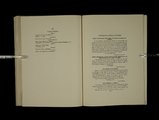
Show 263 262 MRS. IlliNROTINZ ul [M A: H. At wan/n my." regard to armament. and possibly we will not use the phrase "In time of peace prepare for war." because I think Mrs. Mead is absolutely right in her position in regard to that: but we want to know just why armament should be put on. \\'e get statistics that come to us. remarkable figures, indicating the vast amount .if money that is beingr spent upon armament. \Ve also realize that sometimes it is necessary to be forewarned and forearmed in the same way. \Ve want to know absolutely every side of the question, and I think you will never have a better chance to hear it than to come to Cincinnati on May 10 and hear the two sides presented. I never realized so much what war meant as I did last night in hearingr that masterly address upon biology of war. If you did not hear it I hope you will get the. speech as it is printed and read it. It is one of the strongest arguments against war that has been presented to me in any way. because it goes beyond Ltatisties. even the statistics of money that might be used for other purposes. \Vc all believe that war should be stopped; we have believed that education would finally bring that about, but this biology of war brings the matter home in a new light and it shows why all these nations have had the decadence which we have recognized in the Latin nations, that their best men have gone to war, their best men have. been destroyed by war, and the others have been left at home to give the next generation of went-lines to the world. That to me is one of the strongest arguments l can briner to myself: I believe it is one of the «trengest arguments that can be presented. lt has been of the greatest interest to feel that we could send a relirW-(vntaliye to this l‘eace Congress. that we were asked to do so. and that the General Federation unanimously selected me to Ttlrl‘t'\llll tlum at this time. I .‘dadam Chairman, it is with great humility but with great earn: ~n;<-ss that I tell you and the members who are here todav that w are niost desirous of looking: carefully into this subject (it pix-re and presenting it to our members. "'6 believe that we may rt't'ietii'tly do so. through the Sooooo members of our l‘ttitiitll‘ n. t,\pplause.t Miss Mary McDowell will now address us. Woman in Industrialism and Her International Interests Miss MARY MCDo\VEI.I.. MADAM CHAIRMAN AND LADIES: I did not know when I began to think about this subject this morning-because I have not had time to think much of it and I thought I would just bring a little greeting-I had not thought how tremendously interested the working woman is in this whole subject of peace. We heard last night in the great meeting down stairs how interested the workingman was, that it is the workingman, the common workingman, who goes out to fight the battles. It is not the kings, it is not the capitalists, it is not our Secretary of War, or our President; it is the common workingman. It is the com- mon workingwoman that has to feel that. I think it is brought home to you when you hear just one figure. I cannot give you the rest of the figures, I lost them, but this is one that I am sure of. \Vhen you are in Bohemia and all through Austria and Hungary-you are shocked at the things the women do. You are shocked to see a woman nursing;r a baby and carrying mortar or brick on a well adjusted hod, that is adjusted so that she can still care for her baby and step up to some place to put the brick or mortar where it is to go. You are shocked to see women climbing up and down with these beds and doing all kinds of work. As you go on the railroads you see women flagr the trains, salute the trains as. they go by, instead of the men. All through Germany it is true, all through Austria it is true. and I am told in Russia it is very true also women are in the fields. They are eoinpelled to do the h *ayy work that men have always naturally done. Why is it? It is because the men are in the army and the women have to take their places. In Bohemia alone forty-seven and some hundredths per cent of the workers are women doing all dittereut kinds of work. There is another side of it. and a side that comes right home we to us. and especially very close to me, In our neighborhood |