| OCR Text |
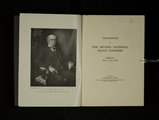
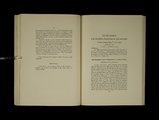
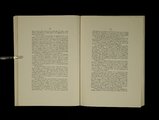
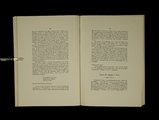
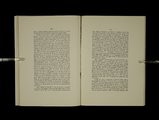
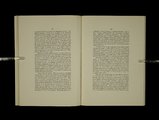
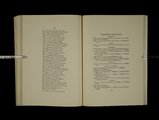
Show 23 PRELIMINARY MEETINGS The Progress of Peace Principles IION. J, M. DICKtxsox. President of the Congress.* The blessings of peace have always been exalted. Yet. as countless woes were inflicted upon Trojans and Greeks alike for a wrong that could never be rightcd. so mankind throughout the ages has suffered the horrors of sensel wars, always hopingr for a fulfillment of the prophecy that strong nations "shall beat their swords into plowshares and their spears into pruning hooks; nation shall not lift up sword against nation, neither shall thev learn war any more." That time is yet far distant, but there has been such development and strengthening of the forces that make for peace that its advocates are boldly aggressive, knowing that they have the potentiality that comes from the quickenecl universal consciences of an enlightened age. "The sky at times is dark and threatening. but Not ubolly so to him who looks ln steadiness: who hath among least things: _\n tuitlct'iseusc of greatest: sees the parts .\s parts. but with a feeling of the whole." The present status in the progress of peace is a product of tbectntiuies. [t is the resultant of the pipette (on of all ideas and em ts tor the substitution of some other tribunal than that or war tor the adjustment of international affairs. "l‘his sperwh "as prepared by Judge Dickinson for the Peace Congress. As his duties as Seeretnry of War required his presence in Panama during 11w l‘mee t'ongress. the author delivered the address before the Ham- Every theory of the doctrinaircs, however impracticable for the times. which contained a germ of truth, as well as every real achievement, no matter how small in comparison with the total of international depravity which prevailed. has become a com- mon heritage of humanity. an inspiration transmitted from age to age. advancingr the thoughts and ideals of men and preparing them for international arbitration, which, entering,r upon a new era about 1815, has so progressed in our time that no one can doubt that it is the most powerful force now working upon the nations for the temporal happiness of mankind. International arbitration. as we know it. is no more a product of the last hundred years than was the federal constitution of 1783') a product of that year. It is a flower of our time. but the roots of the plant which matured it found their beginning in the soil of previous centuries. The greatest peace contribution before otir time was that of Hugo ('lrotius (ISRS-Ifi_t5l. the author of "De Jure Belli ac Pacis." published during the horrors of the Thirty Years' \Var. of which Andrew I). White said: "Of all works not claiming diyine inspiration, that book. written by a man proscribed and hated both for his politics and his religion. has proved the greatest blessing to humanity. More, than any other it has prevented uumerited suffering. misery and sorrow; more than any other it has eunobled the military profession: more than any other it has promoted the blessings of peace and diminished the hor- rors of war. . . . We may rewrently insist that in the domain of internatiomtl law (irolius said. ‘I.et there be light.' and there was light." The thoughts and sentiments implanted from time to time in the mind of humanity, though, like all great thing's. slow of development. stirred the public conscience and subdued. havingr as a powerful auxiliary the economic conditions involved in the direct and indirect costs oI modern warfare. the fierce tendencies of nations. lint little practical progress was made during; the periods of blood and carnage that prevailed until the beginning' of the nineteenth century. The formation of our federal constitution. creating for llII‘ first time a court with full and final power to settle all contrw versies ilton ('luli at l'hivngu. April 9. 4') between sovereign states. was the greatest step ever |