| OCR Text |
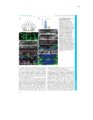
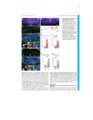
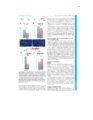
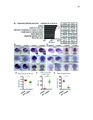
Show 100 are that Top:GFP+/Lef1+ cells have nuclear Lef1 whereas Top:GFP-/Lef1+ cells have cytoplasmic Lef1, or Top:GFP+/Lef1- cells may be driven by other TCF/LEF family members. To validate this theory, one would need to obtain a coexpression profile for Lef1 and Top:GFP at subcellular resolution. Nevertheless, the behaviors of Lef1+ cells may be different than those of Top:GFP+ cells. After differentiation: I observed present but weaker Top:GFP activity in Lef1dependent ventricular HuC/D+ cells (not shown). These HuC/D+ cells coexpress weak dlx5/6:GFP, but do not coexpress th2:GFP (not shown), serotonin (5-HT) or Sox3 (not shown), suggesting that they are GABAergic. Why is Wnt activity weak in these ventricular HuC/D+ cells? What are the properties of those Lef1-dependent HuC/D cells? Why are most identified zebrafish Lef1 targets not expressed close to the ventricle? Are those ventricular HuC/D+ cells immature neurons that just differentiate at the ventricle and undergo migration? Do they turn off Wnt activity after completing differentiation? To answer these questions, one could make transgenic lines tracing Wnt-responsive cells by Top:Cre or Lef1 lineage by lef1:Cre, or Lef1-dependent HuC/D+ cells using identified targets as candidates (e.g., pde9a, cracr2aa). One could also use HuC/D promoter-driven heat shock transgenic lines to activate or inhibit Wnt signaling in only HuC/D+ neurons. This experiment could also test the previously proposed hypothesis that inhibition of Wnt signaling in neurons is required for neuronal differentiation (Wang et al., 2012) (also see section 1.6). Before differentiation: In the hippocampus, Lef1 is expressed in BLBP+ stem cells (Choe et al., 2012), whereas in the hypothalamus, Lef1 may not show the same expression. This may be because that zebrafish posterior hypothalamic Wnt responsive cells are mainly |