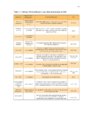
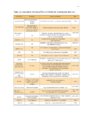
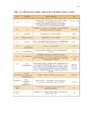
| OCR Text |
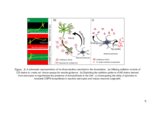
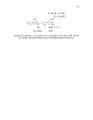
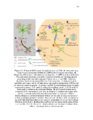
Show 33 largely defined by their sulfation patterns. Therefore, a thorough understanding of the structure-function relationship of the GAGs is a topic of great biological and clinical interest. In Chapter 2, the differential influence of CS sulfation patterns on neuronal growth is described. It was concluded that sulfation pattern of underlying GAGs had significant bearing on both neuronal growth and preference. Chapter 3 demonstrates the importance of sulfation patterns of GAGs in astrocyte-mediated neuronal inhibition. By characterizing the HS and CS components of PGs synthesized by astrocytes, a novel pathway that could be a part of inhibitory manifestations of reactive astrocytes was discovered. Reactive astrocytes were found to secrete endosulfatases in the CM, enzymes responsible to cleave 6-O-sulfations present on HS chains. Various HS structures containing these specific sulfations are responsible for sequestering growth factors. In CNS injuries, endosulfatases secreted by reactive astrocytes could render neuronal HSPGs inactive to bind to certain growth factors, further reducing their regenerative potential. Therefore, in this chapter, expression of endosulfatases by reactive astrocytes is reported. In Chapter 4, an alternative approach to reduce neuro-inhibitory influences of CSPGs secreted by reactive astrocytes is reported. By using click-xylosides to under-glycosylate the CSPGs, one can rescue neuronal growth in response to astrocyte-conditioned media (CM). Click-xylosides compete with endogenous xylose residues of the astrocytes and reduce the biosynthesis of CSPGs. The study investigates the importance of glycosylation density (or valency) in the functionality of CSPGs. |