| OCR Text |
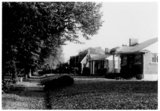
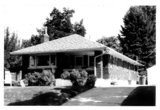
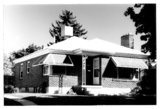
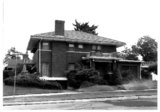
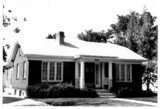
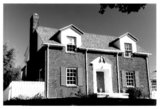
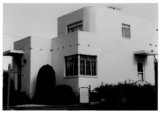
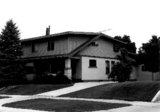
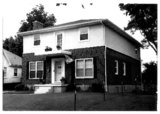
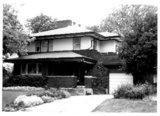
Show NPS Form 10-900-a Utah WordPerfect 5.1 Format (Revised Feb. 1993) 0MB No. 10024-0018 United States Department of the Interior National Park Service National Register of Historic Places Continuation Sheet Section No. _8_ Page 14 Highland Park Historic District, Salt Lake City, Salt Lake County, UT The majority of buildings constructed in the district were bungalows and period revival cottages. Nearly 29% percent of the homes are bungalows, either Arts and Crafts or Prairie School. These styles were popular in Utah from 1905-25 and incorporated many similar stylistic features such as low, hipped roofs and wide, overhanging eaves. The wide porches help to create an impression of informal living and unite the houses to their sites. The bungalow plan is open, informal, and economical and became the basic middle-class house, replacing the late-nineteenth century Victorian cottage. Like the Victorian style, the bungalow's popularity can be attributed to the widespread use of architectural pattern books and a corresponding period of economic prosperity when many families were purchasing their first homes.52 Approximately 64% of the homes in the district are Period Revival English Cottages, English Tudor, and Colonial Revival homes. Period Revival styles were popular in Salt Lake City and throughout Utah primarily between 1920-40. Most of the Period Revival homes in Highland Park Historic District were constructed in the 1920s. A possible reason for the rise in popularity of the Period Revival style may have resulted from national pride following World War I which led to its increased use. English Tudor, Spanish Revival, and French Norman styles were most likely imported by soldiers returning from the war in Europe. These designs were based primarily on external decorative features rather than the historical building and planning traditions and "were simplistically massed, suggesting the informality that various architectural writers of the period stated was appropriate to the American way of life."53 CONCLUSION Highland Park is significant as an early twentieth century suburb in Salt Lake City. Research indicated that its importance was based on its unusually large size and scale when compared with other previous local developments, as well as its stylistic and formal cohesiveness; but in order for this large scale to occur, other unusual conditions must have been in place. Kimball & Richards was by far the largest and most comprehensive developer in Salt Lake City. Eighty-six years have passed since this subdivision was graded and landscaped, and its appearance has changed little. Many of the original shade trees are gone; however, the uniform setbacks and grading remain as a visible tribute to the immense landscaping efforts of Kimball & Richards. Highland Park was the first suburb to be built on the south side of Parley's Creek, a naturally imposed boundary, and it occupied one-third of the 900-acre Sugar House Annex of 1910 and was the most significant local example of a national trend toward annexation as a means to provide vital utilities and services to peripheral suburbs. Most suburbs relied on streetcars for accessibility, but Highland Park was unique for its express service, another example of Kimball & Richards' comprehensive approach to real estate development. __ See continuation sheet 5*Thomas Carter and Peter Goss, Utah's Historic Architecture. 1847-1940 (Salt Lake City: University of Utah Graduate School of Architecture and Utah State Historical Society, 1991). 53 Carter and Goss, pp. 145-146. |