| OCR Text |
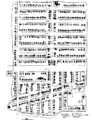
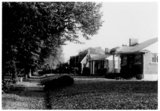
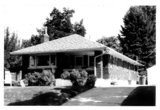
Show NPS Form 10-900-a Utah WordPerfect 5.1 Format (Revised Feb. 1993) OMB No. 10024-0018 United States Department of the Interior National Park Service National Register of Historic Places Continuation Sheet Section No. _8_ Page 12 Highland Park Historic District, Salt Lake City, Salt Lake County, UT Like most east side developments, Highland Park catered to middle-class, salaried white men with families. Its location and restrictions made it the perfect place to raise a family, up in the "pure air" and away from "questionable" neighbors. A random sample of Highland Park residents in the 1925 Folk's Salt Lake City Directory included thirteen clerks, eleven department managers, nine salesmen, three bookkeepers, seven engineers, eleven men in the various building trades, three teachers, six railroad and utility men, and six business owners. Kimball & Richards used a variety of techniques to sell Highland Park. Between 1910 and 1922 they took out approximately two hundred illustrated advertisements for this subdivision in the Salt Lake Tribune. They also offered free advertising booklets which told the story of Highland Park. In their Main Street office the developers also created unique window displays designed to promote the peaceful and healthy lifestyle that could be achieved in the suburbs. Each year between 1910 and 1916 Kimball & Richards presented an exhibit at the state fair, including a seventy-five foot by twenty-five foot topographical model of Highland Park, showing cement walks, paved streets, parking strips, gutters, fire hydrants and trees.45 In the spring of 1913 Kimball & Richards initiated a unique monthly design contest for homes to be built in the subdivision,46 and the following year they sponsored a Kodak photo competition for the most beautiful views of Highland Park. Highland Park's planning and development was intended to define an internally-structured and cohesive neighborhood. The visual quality of the district is created by a combination of several factors: the sloping terrain, sloped or terraced yards, uniform setbacks and spacing, landscaping, and the architectural quality of many of the homes. While all subdivisions in Salt Lake City were named when they were developed, few remain easily identifiable today. Highland Park has withstood the test of time and most people recognize the name with the area that is being designated for nomination. Highland Park Historic District is also important because it contains numerous buildings that are both significant and modest examples of the work of prominent Utah architects. Since several architects participated in the subdivision's development, their awareness of current trends in suburban planning no doubt influenced its plan. It may be that the layout of much of Highland Park was designed by Taylor Woolley, a prominent Utah architect, although no primary sources found to date reflect that idea. The architectural firm he formed in 1917, Miller, Woolley, and Evans, was one of the first to include a landscape architecture department. They did not limit their designs to buildings but included the planning of the State Capitol grounds and Memory Grove. Wooiley's firm also believed to have influenced the architecture in the area. Other architects who influenced the area included Samuel C. Dallas and William S. Hedges, and their firm known as Dallas & Hedges, Architects, prominent in Utah during the late 19th and early 20th centuries. Dallas was born in Salt Lake City in 1858 and practiced architecture in Utah during 18851920. According to a booklet from the 1893 World's Columbian Exposition booklet, Dallas designed the 45 Salt Lake Tribune. October 1,1916. 16. 46 Ibid., March 23,1913. 23. X See continuation sheet |