| OCR Text |
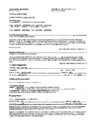
Show NPS Form 10-900-a Utah WordPerfect 5.1 Format (Revised Feb. 1993) OMBNo. 10024-0018 United States Department of the Interior National Park Service National Register of Historic Places Continuation Sheet Section No. _8_ Page 10 Highland Park Historic District, Salt Lake City, Salt Lake County, UT both sales and rentals.29 It also invested heavily in large rural properties covering much of the Intermountain West during World War I when food shortages were prevalent. This farm and ranch department was mostly speculative, based on the firm's anticipation of the desire for farmland by returning war veterans. By the mid-1920s, however, the land rush had not occurred, and its investments were virtually impossible to liquidate.30 In 1926 Don Carlos Kimball and Claude Richards closed their offices, and they each continued to pursue real estate careers independently. THE HISTORY OF HIGHLAND PARK Kimball & Richards bought 245.73 acres of vacant unincorporated land along with all water rights on August 3,1909 from the IDS Church, taking out two mortgages totaling $90,000 that same day.31 The land was completely unimproved and had been used as the summer training grounds by the Utah National Guard. The land was subsequently surveyed into five plats totaling 3124 lots during a six year period. Annexation was important to suburbs outside of city limits, because the county did not provide services such as city water, garbage pick-up, mail service, schools, and police and fire support. In March, 1910 Highland Park Plat "A" became part of the Sugar House Annex, the largest in Salt Lake City's history by thirty times. Kimball & Richards' next priority was to put in place the infrastructure of Highland Park. Streets were graded, and the water and sewer lines were laid at six times the rate of those in the city.32 In 1910 more than twenty-two miles of sidewalk were laid in the subdivision during a three month period. During the same entire year only three miles were laid in all of Salt Lake City, which was almost ninety-six times larger than Highland Park.33 In 1914 more than one third of the city's road paving took place in the tract, mostly funded by the developers.34 Kimball & Richards contracted the Utah Light & Railway Company in 1912 to extend the Sugar House line through Highland Park. It was similar to other suburbs in its dependence on the trolley lines for access; however, it was significant for its exclusive express service, which carried passengers from downtown to Highland Park in seventeen minutes at a cost of five cents.35 By 1914 Highland Park had running water, a new fire station, a new police station, and regular mail service.36 Two years later services included garbage pick-up and a four room school. 29 Folk's Salt Lake City Directories. 1909-1925. 30This information is based on a 1984 telephone conversation between Utah State Historic Preservation Coordinator Roger Roper and Mary Kimball Johnson, daughter of Don Carlos Kimball. 31Abstracts and Mortgages, Salt Lake County Recorder's Office. 32 Salt Lake Tribune. June 12,1910. 20. 33 Sa/f Lake City Engineer's Report. 1910. 34lbid. 35 Salt Lake Tribune. July 21,1912. 12. 36 lbid., August 23,1914. 21. X See continuation sheet |