| OCR Text |
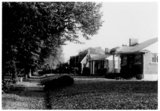
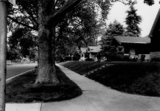
Show NPS Form 10-900-a Utah WordPerfect 5.1 Format (Revised Feb. 1993) 0MB No. 10024-0018 United States Department of the Interior National Park Service National Register of Historic Places Continuation Sheet Section No. _8_ Page 11 Highland Park Historic District, Salt Lake City, Salt Lake County, UT American planners at the beginning of this century devoted themselves to creating greater civic beauty via landscaping. Early newspaper ads for Highland Park claimed that 7,000 shade trees were planted in all of the "parkings" (parkways),37 and in 1913 this subdivision became the first local neighborhood where lots were sold with six peach trees in addition to the shade trees.38 Highland Park is also characterized by uniform landscaping. It was built on a naturally sloping hillside, so grading was required for the lots as well as the streets. Concerned with the uneven appearance of occupied and empty lots in 1915, Kimball & Richards spent several years planting the vacant lots with food crops.39 In the early twentieth century many local real estate developers looked to California for its innovative planning and architecture, and Kimball & Richards were among the first to do so. The wait stations for the streetcar line were designed after a thorough study of ornamental monuments in California.40 The practice of planting shade trees in the "parking" may not come exclusively from California, but Don Carlos Kimball got the idea from a research trip to the west coast.41 Highland Park was one of the earliest subdivisions to include California style bungalows. Furthermore, several of the company's top executives made a month-long journey to the coast to increase their knowledge of California realty practices. Upon their return, they hosted a banquet and gave lectures on "California Business Methods," "California Salesmanship and Advertising," "California Farms and How They Are Sold," and "Things Said, Seen, and Done on Our Trip."42 Building restrictions appeared in Salt Lake City as early as 1890 in Perkins1 Addition to ensure minimum building costs and to exclude commercial structures. In 1913 racial restrictions first appeared in the Dunshee Brothers' subdivision, Westmoreland Place.43 This practice would not, however, become commonplace in Salt Lake City until 1920. Building restrictions were set in place from the beginning in Highland Park, but on January 19,1919 the first newspaper advertisement addressing racial restrictions appeared in the Salt Lake Tribune. They were used as a selling point, claiming that "you are securing protection for your home and property for all time." Restrictive covenants, especially those concerning race, continued to be popular until after World War II. This was common throughout the country. Beginning in 1934 the Federal Housing Administration (FHA) strongly encouraged this practice for fear of "inharmonious racial or nationality groups." The FHA had a strong interest in retaining the stability of suburban neighborhoods because it was responsible for the mortgages.44 "ibid., April 17,1910. 23. 38 lbid., April 13,1913. 13. 39 lbid., May 7,1916. 20. 40 Paul C. Kimball. yu. 42 Salt Lake Tribune. April 4,1915. 23. 43 Jane Brinkerhoff and Stephanie Turner. Westmoreland Place: A Retrospective of Homes Built Between 1913 and the Early 1920s. University of Utah, 1993,1. 44 Kenneth L. Jackson. Crabgrass Frontier: The Suburbanization of the United States (New York: Oxford University Press, 1985). 208. X See continuation sheet |