| OCR Text |
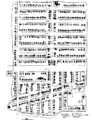
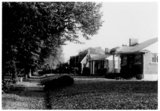
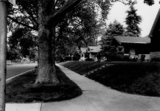
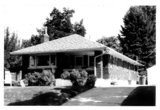
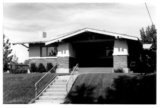
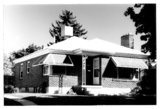
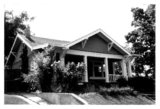
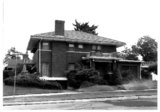
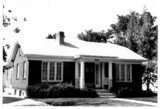
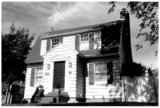
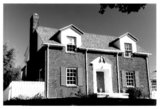
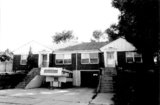
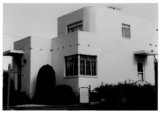
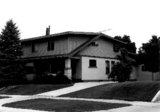
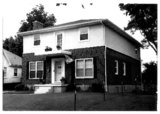
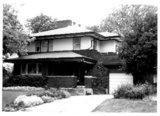
Show NFS Form 10-900-a Utah WordPerfect 5.1 Format (Revised Feb. 1993) OMBNo. 10024-0018 United States Department of the Interior National Park Service National Register of Historic Places Continuation Sheet Section No. _L Page _L Highland Park Historic District, Salt Lake City, Salt Lake County, UT Narrative Description The Highland Park Historic District in Salt Lake City is located just south of the Sugar House business district, separated only by lnterstate-80, which covers historic Parley's Creek. The subdivision sits on Salt Lake City's east bench and is primarily represented by residential building stock on tree-lined gridded streets. The neighborhood is characterized by landscaping features including uniform setbacks and similarities in house types, styles, and materials. Most of the homes are moderate single-family dwellings with a small mix of duplexes and apartment buildings. There is a small business district running along the west side of the south end of Highland Drive, which was established during the historic period, but has been altered and does not contribute to the district. However, several contributing commercial buildings at the north end of Highland Drive are historic (having replaced homes built by the original developers, Kimball & Richards in the late 1920s. There are two churches in the district, both built by the Church of Jesus Christ of Latter-day Saints (LDS or Mormon). Thirteenth East has been widened on the east side, and this boulevard now bisects the district running north and south, but does not significantly impact the historic association and feeling that remains across the width of this street. The twenty-six block district retains a high degree of historic integrity with 97% of the buildings dating from the historic period of significance (1910-40s), with 78% of the building stock contributing to the district and, 18% altered to the point of being non-contributing, and 3% constructed outside the historic period. Landscaping Features Highland Park is an excellent example of the landscaping influenced by the "City Beautiful" movement in Salt Lake City because of its high density of shade and fruit trees, other decorative plantings, and its hillside grading. Kimball & Richards planted thousands of shade trees along the streets, many of which still can be seen, especially above 1300 East (Figure 1). Highland Park was built on a naturally sloping hillside, so grading was required for the lots as well as the streets. All of the land was sculpted to create uniform yards throughout the tract. Every house on the east side of each street has a similar berm leading up to a flat lawn the same height as its neighbors (Figure 2). Houses on the west side of each street have uniformly flat yards. Lots on the streets running east-west are sculpted with berms leading up to flat yards, and each lot is stepped down from the one above it, giving each street a terraced effect. Residential Building Stock Types: The most common house type represented in Highland Park is the bungalow, which comprises 45% of the contributing housing stock in the district. There are three main bungalow types found in Utah, all of which can be found in Highland Park. The first is narrow and deep and can have either a hipped or gabled roof (Figure 3). The second type is one and a half stories and has a gabled roof which runs parallel to the street (Figure 4). The roof usually projects out over a full-width porch and almost always has a central dormer. The third is a small gabled cottage with its wide end placed toward the street, X See continuation sheets |