| OCR Text |
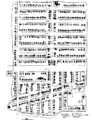
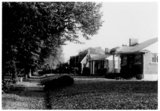
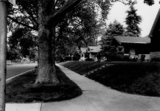
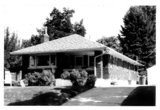
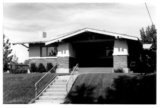
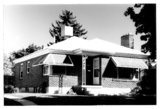
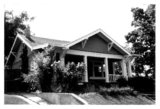
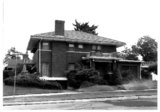
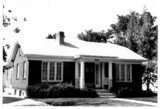
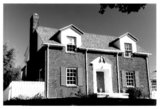
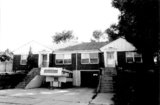
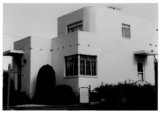
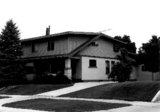
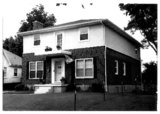
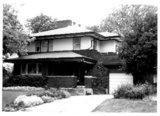
Show NFS Form 10-900-a Utah WordPerfect 5.1 Format (Revised Feb. 1993) OMB No. 10024-0018 United States Department of the Interior National Park Service National Register of Historic Places Continuation Sheet Section No. J3_ Page _4_ Highland Park Historic District, Salt Lake City, Salt Lake County, UT Narrative Statement of Significance Highland Park, developed between 1910 and 1926 by Kimball & Richards Land Merchants, with development continuing through the 1940s, is an important historical subdivision in Salt Lake City, Utah and is significant under National Register Criteria A and C. At the turn of the century America experienced a huge speculative real estate boom outside the core urban areas as cities became more industrial. Highland Park is significant for its place in this movement as a local forerunner of subdivisions providing complete real estate services. It is also significant as an architecturally cohesive neighborhood from the early twentieth century, having a high percentage (80%) of buildings that retain their historic integrity. Within the context of local land development there are a number of important themes which contribute to the significance of Highland Park: (1) the scale of the subdivision; (2) its distance from the city core; (3) the landscaping of the subdivision as a whole; and (4) its architectural styles and types. Highland Park is important for its grand scale, having approximately twenty-five times as many lots in its first plat as most typical local subdivisions of the same period. Annexation was important to subdivisions in unincorporated areas because of the lack of city services, and Highland Park is an early and very large example of annexation into Salt Lake City. Between 1890 and 1909, three annexes were added to the city, none larger than thirty acres.2 Kimball & Richards lobbied to pass the Sugar House Annex of 1910, which included nine hundred acres, one-third of which was Highland Park. They also arranged for an exclusive and innovative express trolley service. This subdivision is also significant for its distance from the city core beyond most pre-existing suburbs and for being the first subdivision on the south side of Parley's Creek, a natural boundary at the time. Landscaping is another recurring theme in local development, and Highland Park stands out because of its high density of shade and fruit trees, other decorative plantings, and its grading. During the early part of this century many local realtors looked to the City Beautiful movement and to California for innovative concepts in planning and architecture, and Kimball & Richards are believed to be the first in Salt Lake City to document their use of California-influenced landscaping in Highland Park. Kimball & Richards were also one of the first realtors to build the "California" bungalow in Utah, in Highland Park. Highland Park displays good examples of architectural types and styles popular in Utah during the 1910s-40s, such as Prairie, Arts & Crafts & California, Colonial Revival, and English Tudor style homes. There are also good examples of houses and churches designed by locally prominent architects such as Taylor Woolley, Pope & Burton, and Dallas & Hedges. Annexation of local unincorporated land began as early as 1890 when the residents of Perkins1 Addition successfully petitioned to be within city limits. They were forced to pay city taxes but did not initially get city services in return. Perhaps as the result of these shortcomings, the practice did not take hold for another twenty years. In 1909, the second and third additions were made to the city, both of which were adjacent to Sugar House. |