| OCR Text |
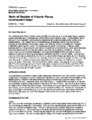
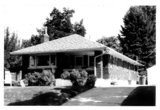
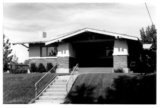
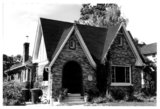
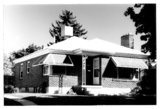
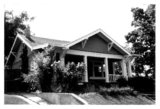
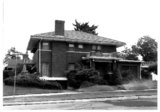
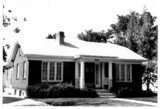
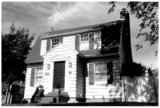
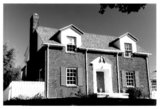
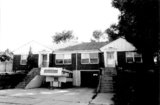
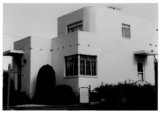
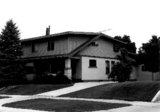
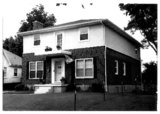
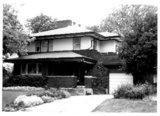
Show NPS Form 10-900-a Utah WordPerfect 5.1 Format (Revised Feb. 1993) OMB No. 10024-0018 United States Department of the Interior National Park Service National Register of Historic Places Continuation Sheet Section No. _7. Page _2_ Highland Park Historic District, Salt Lake City, Salt Lake County, UT and it usually has a small central front porch (Figure 5). This type can occasionally be found as a duplex. The Period Cottage is the second most represented contributing house type in the district, incorporating 30% of the housing stock. It is built in a range of types and styles, and its ornament usually quotes medieval building forms (Figure 6). It can have multiple gables or just one, and its floor plan often has an open circulation pattern similar to the bungalow. The third basic house type is the World War il Era Cottage. Comprising 25% of the housing stock, these houses were constructed post-Kimball & Richards. These structures are usually small one-story brick boxes (or double boxes in the case of duplexes) with hipped roofs and little or no ornamentation (Figure 7), but they can also be one or one-and-one-half story gabled rectangles with brick or clapboard veneer (Figure 8). Styles: A number of architectural styles in Highland Park represent the prevailing tastes of the early twentieth century. Bungalows are often designed in the "Arts & Crafts" style (5%) and are characterized by their gabled roofs which extend over wide porches and are pierced by dormers and sleeping porches (Figure 9). They have wide overhanging eaves with exposed rafters and purlins, and often gable ends have framing members exposed through stucco. Windows are either casement or double-hung and usually have either stained or leaded glass or small square lights in the upper section. The most popular veneers are regular or clinker brick, shingles, stucco and cobblestone. The "Prairie" style (12%) can be seen in two types of Highland Park houses. This genre emerged from the early work of Frank Lloyd Wright and his Midwest associates. It emphasized clean angular lines in a horizontal composition and reduced the complex Victorian home to a simple rectangular box with a low pitched hipped roof. Horizontality was achieved through the use of repeated brick or cast-stone banding, roman bricks, long banks of stained or leaded glass windows, wide overhanging eaves, accentuated foundations and broad porte-cocheres. Bungalows and Prairie boxes (Figure 10) were the two types that Incorporated this style. The "Colonial Revival" style (17%) was also used in several house types. Bungalows included clipped gables and small porches with white painted turned columns under pedimented roofs (see Figure 11). Period cottages featured such characteristics as clapboard siding or brick siding with clapboard gables, bay windows, double-hung windows with shutters, cornice returns, and turned porch columns (Figure 12). The Colonial Revival style continued to be used in World War II Era cottages (Figure 13). These were often clad in brick with clapboard gables and featured double-hung windows with shutters, dormers and turned column porches or fluted pilasters flanking the entrance. X See continuation sheets |