| OCR Text |
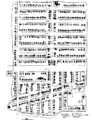
Show NPS Form 10-900-a Utah WordPerfect 5.1 Format (Revised Feb. 1993) QMS No. 10024-0018 United States Department of the Interior National Park Service National Register of Historic Places Continuation Sheet Section No. JL Page _9_ Highland Park Historic District, Salt Lake City, Salt Lake County, UT landscaped spaces and it maintained the rectilinear street grid.25 Restrictive covenants were also a part of the advertising for this development. Many areas were developed not as a single subdivision but by speculative developers purchasing a few lots within an area. For example, the University Neighborhood Historic District, roughly bounded by South Temple and 500 South between University and 1100 East, was not a 'subdivision', but built with small speculative developers and owner/builders. In addition to its single-family residences there are numerous apartments, and commercial buildings.26 THE HISTORY OF KIMBALL AND RICHARDS Kimball & Richards was perhaps the biggest of the early twentieth century developers in Salt Lake City. Between 1908 and 1925 they platted more than thirty local subdivisions. The firm was organized in 1907 by Don Carlos Kimball and Claude Richards, prominent members of the IDS Church. The company grew rapidly, and by 1910 they had a large office staff which handled a variety of responsibilities, including property sales, rentals, loans, construction, and insurance. Prominent local architect Taylor Woolley is credited by a family history27 with planning Highland Park, as well as designing several homes in the subdivision for Kimball & Richards. By 1908 Kimball & Richards Land Merchants had split into three companies, adding Kimball & Richards Building Company and Kimball & Richards Securities Company in order to provide a complete real estate service for prospective purchasers. The Land Merchants were responsible for purchasing, subdividing, and improving large tracts of land. They also sold the improved property, and by eliminating banks and offering their own credit plan to customers, they were able to increase their profits. The Building Company handled the construction of both speculative and custom ordered homes. They primarily used five independent contractors: Elijah and John Thompson, Henning Henderson, George and Thomas Biesinger, Walter Stumm, and Louis H. Sims.28 The Securities Company provided the financing for the company's real estate development activities. It raised the large amounts of cash needed to run the business by acting as an alternative institution to banks for saving and investing money. In addition to developing more than thirty local subdivisions during its nineteen year reign, Kimball & Richards also acted as listing agent for individual homes and businesses in Salt Lake City, handling 25 Jane Brinckerhoff and Stephanie Turner, "Westmoreland Place", unpublished manuscript, December 1993. Available at Utah State Historic Preservation Office. 26 University Neighborhood Historic District, National Register nomination, 1995. On file at Utah State Historic Preservation Office. 27 This source has not been substantiated by any primary sources and evidence of Woolley's involvement in the planning of Highland Park is inconclusive. Woolley did spend five years under the direct tutelage of Frank Lloyd Wright. There is some speculation that he may have planned Highland Park while in Chicago working for Wright. 28 Letter from Paul C. Kimball, son of Don Carlos Kimball, to Roger Roper, April 6,1984. X See continuation sheet |