| OCR Text |
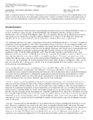
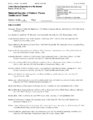
Show United States Department of the Interior National Park Service / National Register of Historic Places Registration Form NPS Form 10-900 OMB No. 1024-0018 (Expires 5/31/2012) Liberty Wells Historic District (Boundary Increase) Salt Lake County, Utah Name of Property County and State The Era of Infilling (1930 to 1945) The Great Depression hit the entire state hard; in 1932 Utah had the fourth highest unemployment rate in the country at 36 percent. lix Mining and railroading, previously mainstays of Utah's economy, were among the hardest hit sectors in the fragile economy. In 1935 one out of five, or 20 percent, of Salt Lake County families were receiving financial relief in one form or another. lx Additionally, many more were living below the poverty line. Federal aid to the valley was vital and Salt Lake County was a major beneficiary of this aid. The pace of residential and commercial development slowed dramatically in the Liberty Area during the Great Depression. Few residents had the funds to purchase homes, banks were unable to lend monies at acceptable interest rates, and the relative costs of building materials had skyrocketed. In spite of the economic challenges, some construction of period cottage, bungalow, and duplex type residences persisted through the 1930s, albeit at a much lower rate than during the preceding boom years. Several commercial buildings were also constructed along State Street during the 1930s, including Taylor's, Inc., an automobile dealership on State Street. No new subdivisions were recorded in the Liberty Area during this period. Like the rest of the country, the Liberty Area did not experience substantial relief from the Great Depression until the United States entered into World War II. The defense industry established and expanded facilities in Utah, creating 13,000 new jobs. Copper mines in the area which had been idle for years saw major production increases. In a sad irony, the war, which resulted in an almost unimaginable loss of life, boosted the local economy to such an extent that for the first time, personal income for Salt Lake County residents was above the national average. lxi The economic upturn is reflected in the increase in construction in the Liberty Area during the 1940s. A large number of World War II-era cottages and commercial buildings were constructed in the first half of the decade. Period cottage residences were also constructed during this period. By the early 1940s, much of the land within the Liberty Area was already developed and new construction consisted primarily of infill development. The Post-War Era (1946 to 1961) The Liberty Area continued to grow and change following the close of World War II. Gilbert McLean, who grew up near Liberty Park and served as a corporal in the U.S. Army during World War II, lxii developed one subdivision (the McLean Subdivision) in the Liberty Area during the post-war period. The McLean Subdivision consisted of a small development of nine lots platted along Denver Street in 1955. No other subdivisions were platted in the area after World War II, highlighting the fact that the neighborhood was largely developed or otherwise fully platted by that time. Based on known construction dates for buildings in the area, redevelopment appears to have occurred on a limited basis starting in the 1960s. Older single-family homes were demolished and replaced with multi-family dwellings or small commercial ventures such as convenience stores or small walk-up stores. A number of historic residences along 900 South and several along State Street were remodeled and converted to commercial buildings. Commercial redevelopment and construction was increasing designed to accommodate the automobile culture rather than pedestrian traffic. Modern Era (1962-Present) For the purposes of this history, the historical period is defined as ending 50 years before present, in 1961. The modern era is defined as beginning in 1962 and continuing at present. During the modern era, redevelopment appears to have occurred on a limited basis, primarily during the 1960s and 1970s. Older single-family homes were demolished and replaced with multi-family dwellings or small commercial structures. A number of historical residences along 900 South and several along State Street were remodeled and converted to commercial buildings. Substantial commercial lix Sillitoe, 1996. Ibid. lxi Ibid. lxii Randle, Rick. Gilbert J. McLean. In Utah WWII Stories. Salt Lake City, UT: Self-published, 2005. lx 28 |