| OCR Text |
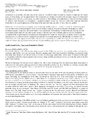
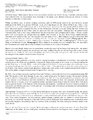
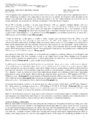
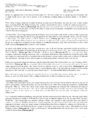
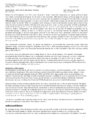
Show United States Department of the Interior National Park Service / National Register of Historic Places Registration Form NPS Form 10-900 OMB No. 1024-0018 (Expires 5/31/2012) Liberty Wells Historic District (Boundary Increase) Salt Lake County, Utah Name of Property County and State considered an acceptable alteration only if the siding is of sufficient width to replicate historical clapboard, horizontal plank, or drop siding, and the application of the siding does not eliminate or reduce the aesthetic impact of architectural detailing around windows, doors, eaves, and other elements of the building. The application of other non-historical siding or exterior wall treatments is considered a significant impact unless the materials sufficiently replicate historical treatments in the overall appearance of buildings of the particular type and style to which they are applied. Under more lenient standards of integrity, more substantial modifications are considered acceptable before integrity is lost. In order to be considered eligible under the more lenient standards, the primary historical building must retain sufficient integrity to represent the era in which it was constructed. The building's overall form and massing must be discernable despite additions and other modifications of the structure. Out-of-period additions may be considered acceptable if the original form of the building is still decipherable. Under the more lenient standards, window and door openings may be enclosed, but their original form and size must remain discernable. Modification of exterior wall treatments, such as the application of modern aluminum or vinyl siding, is considered acceptable if the new treatment replicates historically appropriate treatments for the given building type and style represented by the property. Architectural Styles, Types, and Materials by Period Farms and Fields (1847 to 1870) Prior to the platting of the Liberty Area beginning in the late 1880s, the area was only sparsely settled and primarily contained agricultural fields and communal livestock grazing areas. With rare exceptions, buildings constructed during this period were single cell or hall and parlor structures built from logs, adobe brick, and/or stone. During the earliest part of the period, semi-subterranean dugouts were common along foothills and terraces but less so in the flat lands of the Salt Lake Valley bottoms. No known buildings from this period are extant in the Liberty Area. Buildings from the period were likely demolished to make room for later construction projects or have been so heavily modified over time that they are no longer recognizable as representatives of this period. This era is not included in the period of significance. Initial Settlement (1871 to 1899) The development of the streetcar system in the Salt Lake Valley in the early 1870s and the platting of the Big Field ca. 1890 spurred speculation by land developers. These developers purchased large tracts of land, platted subdivisions, and began promoting the establishment of the first real suburbs in Salt Lake City. Four subdivisions were platted in the Liberty Area during the late 1880s and early 1890s. However, development within them was limited until near the turn of the century and did not reach fruition until the era of streetcar subdivisions (1900-1929). Maps published by the Sanborn Fire Insurance Company (Sanborn maps) dating to 1898 do not include the Liberty Area, which may indicate that the area did not contain concentrations of buildings that were at risk for fire. This may suggest that little development had occurred within the subdivisions prior to 1898. Buildings constructed in the Liberty Area during this period occurred primarily along the arterial streets - State Street, 900 South, and 1300 South, and 300, 400, and 500 East. A number of houses were also built along Harvard and Hampton Avenues in the late nineteenth century. Harvard and Hampton Avenues are not listed in city directories for 1895 or 1900 and they were likely referred to by other names at the time. These houses are not located within any of the early subdivisions and represent the construction of individual residences on subdivided Big Field lots. During the last decades of the 1800s, simple Classical styling in architecture slowly gave way to more elaborate Victorian styles across the state. iv Cross-wing structures in variants of "T-" and "L-cottages" and double cross-wings along with other typically Victorian forms such as rectangular blocks and central-blocks-with-projecting-bays became popular throughout Utah during these last decades of the nineteenth century and continued in their popularity through the early iv Carter, Thomas and Peter Goss. Utah's Historic Architecture, 1847 -1940: A Guide. Salt Lake City, UT: University of Utah Press. 1988. 8 |