| OCR Text |
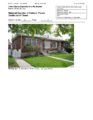
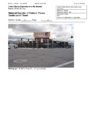
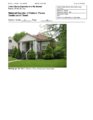
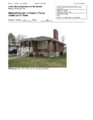
Show United States Department of the Interior National Park Service / National Register of Historic Places Registration Form NPS Form 10-900 OMB No. 1024-0018 (Expires 5/31/2012) Liberty Wells Historic District (Boundary Increase) Salt Lake County, Utah Name of Property County and State District is thus historically significant at the local level for its association with changing trends of community planning and development during the Era of Infilling. The Early 20th Century American residences that characterized the Streetcar Suburbs period continued to be constructed during the early part of the Era of Infilling, thus rendering the Liberty Wells Historic District significant under Criterion C. Many of the Early 20th Century American residences from this period are considered contributing resources within the district. Period cottages and clipped-gable cottages are the most common types of Early 20th Century American residences constructed in the area during the early years of Era of Infilling. These architectural types are also observed on double houses and duplexes of the period. The application of these architectural forms to a range of building types, such as duplexes, illustrates how they were adapted to evolving residential needs. The district is thus historically significant at the local level for its architecture from the Era of Infilling. The Post-War Era (1946-1961) Under Criterion A, the Liberty Wells Historic District is significant for its association with the resurgence in housing and commercial construction after World War II, which shaped the final build-out of the area. Single- and multiple-family dwellings continued to be constructed in the neighborhood as infill development. By the end of the period, multiplefamily dwellings began to include larger units, rather than the double houses and duplexes common during the earlier periods. New commercial construction during the period was concentrated along 900 South and State Street. Commercial buildings in the area reflect the spread of automobile culture during the Post-War Era, as they were designed to accommodate cars rather than pedestrian traffic. As with multiple-family dwellings, the scale of commercial buildings began to increase during this period. The Liberty Wells Historic District is thus historically significant at the local level for its association with community planning and development, as well as for its relationship to transportation and the spread of automobile culture, during the Post-War Era. Justification for a Boundary Increase to the Existing Wells Historic District This section aims to compare and contrast the Liberty Area with the existing Wells Historic District. It will provide the justification for expanding the existing historic district to include the Liberty Area, rather than creating a new historic district for the Liberty Area. The Liberty and Wells areas share a common history of development. To avoid redundancy, the history common to both areas will not be repeated here. A complete history of the Liberty Wells neighborhood is presented in the nomination form for the existing Wells Historic District vi. Information specific to the Liberty Area is provided in the Developmental History section of this nomination. The Liberty Area is directly north of the existing Wells Historic District. The Wells Area extends south from 1300 South, the southern boundary of the Liberty Area, to 2100 South. With the exception of Liberty Park, the Liberty and Wells areas share essentially the same history and similar patterns of development occurred in both areas. Both were originally part of the Big Field area, which was used for agriculture during the early settlement of Salt Lake City. Following the extension of streetcar lines south of 900 South, the two areas were served by the same streetcar lines, which ran along State Street, 400 East, and 700 East. The Liberty and Wells areas both experienced rapid residential development as the population increased and improved transportation allowed residents to move to the suburbs. The two areas provided residents with a suburban setting for their homes as well as easy access to the downtown core. Subdivisions and individual buildings were developed specifically to appeal to residents' interest in suburban life. Thus, both areas have a distinctively suburban feel, in both their building stock and their streetscapes. The predominance of Early Twentieth Century American buildings, as well as narrow streets, sidewalks, mature shade trees, and uniform setbacks, create a sense of cohesion between the two areas and reflect their common history. vi Murray-Ellis, Sheri. National Register of Historic Places Registration Form: Wells Historic District. Salt Lake City, UT: SWCA Environmental Consultants, 2009. 18 |