| OCR Text |
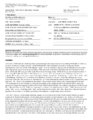
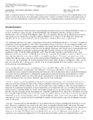
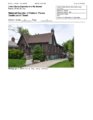
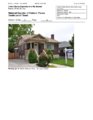
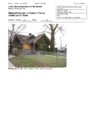
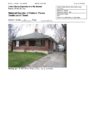
Show United States Department of the Interior National Park Service / National Register of Historic Places Registration Form NPS Form 10-900 OMB No. 1024-0018 (Expires 5/31/2012) Liberty Wells Historic District (Boundary Increase) Salt Lake County, Utah Name of Property County and State During the Initial Settlement period (1871 to 1899), the Liberty and Wells areas were both characterized by residential development dispersed within a primarily agricultural area. Development was concentrated along the major through streets and consisted primarily of individual buildings rather than subdivision development. A large number of subdivisions were platted in both areas toward the end of the period, as developers began to anticipate the growing need for housing. However, the majority of these subdivisions were not built until the 1900s. Sanborn maps dating to 1898 do not include the Liberty or Wells areas, which may indicate that at the time, the areas did not contain concentrations of buildings at risk for fire. In the Wells Area, 3.3 percent (n = 63) of the contributing buildings were constructed during this period. Of these, more than two-thirds represent Victorian forms and styles. Residences from the Initial Settlement period occur less frequently in the Liberty Area. Only 1.5 percent (n = 12) of the contributing buildings in the Liberty Area date to this period. Two-thirds of these represent Victorian forms and styles and the remaining buildings represent Classical styles. The lower frequency of buildings from the settlement period in the Liberty Area is somewhat unexpected. The Liberty Area is closer to the downtown core than the Wells Area, suggesting that early buildings should perhaps be more common in the Liberty Area. The Liberty Area was divided into smaller plots for artisans during the Big Field survey, rather than large agricultural tracts; these plots may have been used by artisans for temporary shop locations, rather than permanent residences. This would have contributed to the low number of early residences in the Liberty Area. The lower than expected frequency of early residences in the area may indicate that early buildings were demolished and replaced during subsequent development, or that early buildings have been modified to the extent that their original forms can no longer be identified. Both the Liberty and Wells areas experienced a dramatic increase in residential development during the Streetcar Suburbs period (1900 to 1929). The concurrent growth in population and expansion of the streetcar system around the turn of the century set the stage for the rapid residential development in the Liberty and Wells areas. Developers began to build houses in subdivisions and on individual lots at a rapid pace in the early 1900s. They promoted the suburban setting of these houses and presented the houses as an attractive alternative to living in the downtown area. Both the Liberty and Wells areas had access to several different streetcar lines that could quickly carry residents to the downtown core, while allowing them to live away from the pollution and crowding. In the Wells Area, 77 percent (n = 1,479) of the contributing buildings were constructed during this period while 76 percent (n = 604) of contributing buildings in the Liberty Area date to this period. The similar percentages indicate that the residential boom had a similar result in both areas. Bungalows, foursquares, period cottages, and central blocks with projecting bays were the most common architectural types in the Wells Area. Similarly, bungalows and period cottages (including clipped-gable cottages) were the most common types in the Liberty Area. Central blocks with projecting bays and rectangular blocks were also common in the Liberty Area. However, few foursquares from this period were observed in the Liberty Area. Bungalow residences are the predominant building type in both areas, occurring in far greater numbers than any other types. The ubiquity of the bungalow form is the defining feature of the Liberty and Wells areas. Most bungalows in the two areas are fairly generic versions of the form, with little exterior adornment. These buildings could be constructed inexpensively and were frequently marketed as affordable residences. Period cottages occur more frequently toward the end of the period in both areas. The Liberty and Wells areas each have a number of excellent examples of period and clipped-gable cottages, some of which also represent elements of the bungalow form. Duplexes built during the early 1900s are more frequent in the Liberty Area than in the Wells Area, but generally reflect the period cottage and bungalow forms that are common to both areas. The rapid residential development that occurred during the Streetcar Suburbs period is the defining feature of both the Liberty and Wells areas. The building stock in the two areas is most similar during this period, creates visual cohesion between the areas, and strongly reflects their shared history. Construction in both areas slowed dramatically with the onset of the Great Depression. Residential development continued, but consisted primarily of infill around existing development. The Era of Infilling (1930 to 1945) is reflected in the Wells Area by several small-scale subdivisions and individual buildings, while development in the Liberty Area during this period consisted only of individual buildings. However, infill development from this period appears to have been more frequent in the Liberty Area, where 14 percent (n = 113) of contributing buildings were constructed between 19 |