| OCR Text |
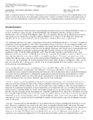
Show United States Department of the Interior National Park Service / National Register of Historic Places Registration Form NPS Form 10-900 OMB No. 1024-0018 (Expires 5/31/2012) Liberty Wells Historic District (Boundary Increase) Salt Lake County, Utah Name of Property County and State Street, 400 East, and 700 East. A number of the residences built during the 1890s along these boundary streets, especially State Street and 900 South, have been demolished during the historic and modern periods. Of the extant residences built in the Liberty Area during this period, most are located along 500 East. Another major development marking the early 1890s in Salt Lake City and influencing the development of the Liberty Area was the establishment of electrical service in March 1891. Electrical service was immediately extended through the Big Field/Liberty Area, though primarily for use in public facilities such as the Calder Park amusement center south of the Liberty Area. Development of a sewer system in Salt Lake City also began during the 1890s. The first efforts to install a city-wide sewer system were initiated in 1890 when contractors laid five miles of sewer pipe in downtown. xxiv Many portions of the community, including the Liberty Area, were not connected to the system until the after the turn of the century. xxv Residents had to wait until the 1920s for regulated garbage collection as well. As transit and infrastructure gradually expanded into the area south of 900 South, and the population of Salt Lake City continued to grown, land merchants and speculators quickly identified the development potential of the Big Field. They began purchasing available tracts and divided them into smaller, residential-sized blocks. Unlike the blocks within the original city plat area, which were configured as squares, the blocks in the Big Field area took the form of rectangles, marking a striking divergence from the Plat of Zion concept championed by the Mormon Church. xxvi Within these new blocks, the residential lots were smaller than those downtown and the streets were much narrower. Individual subdivisions were platted within the newly surveyed portion of the Big Field, although they were not built out until later. Four subdivisions were recorded in the Liberty Area between 1889 and 1892: Linden Park (1889, 45 lots, south of 900 South, between State Street and 200 East), Denver Place (1890, 121 lots, north of Herbert Avenue, between 400 and 500 East), Pendletons (1890, 57 lots, Edith Avenue to 1300 South, between 300 and 400 East), and Leadville Place (1892, 40 lots, south of Herbert Avenue, between 300 and 400 East). Maps published by the Sanborn Fire Insurance Company (Sanborn maps) in 1898 do not include the Liberty Area, indicating that the area lacked concentrations of buildings at risk of fire. This suggests that little development had occurred in the subdivisions prior to 1898. Buildings constructed in the Liberty Area during this period occurred primarily along the arterial streets-State Street, 900 South, and 1300 South, and 300, 400, and 500 East. A number of houses were also built along Harvard and Hampton Avenues in the late nineteenth century. Harvard and Hampton Avenues are not listed in city directories for 1895 or 1900 and they were likely referred to by other names at the time. These houses are not located in the early subdivisions and instead represent the construction of individual residences on subdivided Big Field lots. During the last decades of the 1800s, simple Classical styling in architecture slowly gave way to more elaborate Victorian styles across the state. xxvii Crosswing structures in variants of "T-" and "L-cottages" and double crosswings along with other typically Victorian forms such as rectangular blocks and central blocks with projecting bays became popular throughout Utah during these last decades, and continued in their popularity through the turn of the century. xxviii While some of the early versions of these structures saw little in the way of exterior adornment, others were endowed with the comparatively fancy dressings of the Queen Anne, Eastlake, Romanesque Revival, Victorian Eclectic, or other late Victorian styles. Victorian-style detailing was perceived as a way to express individual tastes and personal identity. xxix Within the Liberty Area, houses from this period are present but rare, as little development occurred in the area during this time. Buildings from the period include Victorian forms such as crosswing, central block with projecting bays, and rectangular block types. However, simpler forms such as foursquare and shotgun types are slightly more common in the xxiv Alexander, 1996. Sillitoe, 1996. xxvi Ibid. xxvii Carter and Goss, 1988. xxviii Ibid. xxix Clark, Clifford E. The American Family Home, 1800-1960. Chapel Hill, NC: University of North Carolina Press, Chapel Hill, 1986. xxv 23 |