| OCR Text |
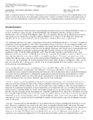
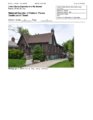
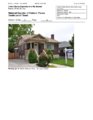
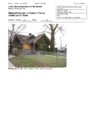
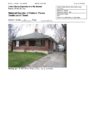
Show United States Department of the Interior National Park Service / National Register of Historic Places Registration Form NPS Form 10-900 OMB No. 1024-0018 (Expires 5/31/2012) Liberty Wells Historic District (Boundary Increase) Salt Lake County, Utah Name of Property County and State cohesion easily distinguishes the Liberty and Wells areas from surrounding neighborhoods to the north and west and to a certain degree from those to the east. Individual subdivisions within the district exhibit the different architectural focus of developers at the time each subdivision was developed, with some subdivisions dominated by Bungalows, others by Victorian forms, others by Period Cottages and Clipped Gable Cottages, and still others by World War II Era Cottages. Other subdivisions exhibit a more eclectic collection of architectural types and styles, reflecting the greater period of time over which the subdivision was developed. Despite the individuality of the various subdivisions, the housing stock within them represents a limited number of architectural types and styles that are present throughout the entire Liberty Area and create cohesion both within the area and with the existing Wells Historic District. Historical infill construction of single-family homes from the 1940s and 1950s is evident throughout the Liberty Area, but contributes, rather than detracts from the area because the massing of the structures is consistent throughout the area. These later structures represent a key period in the neighborhood's history, when most of the lots had been developed and only a few remained available for new construction. More recent (1960s+) infill projects, on the other hand, have introduced large, multi-family apartments, commercial buildings, and other structures, the scale of which is not in keeping with the rest of the district. This is particularly evident along 900 South and State Street and is less common in the interior of the Liberty Area. Commercial development - both historical and modern - is largely centered on the major through-streets that bound the area: State Street, 900 South, and to a much lesser degree, 1300 South. Commercial development is also present along Edison Street, which is only a block removed from State Street. Away from these corridors, commercial development consists primarily of individual specialty shops, such as small markets, scattered among residential structures. The Liberty and Wells areas are generally characterized by similar patterns of development and building stock. However, slight differences in development and building stock are present. These differences appear primarily during the Initial Settlement period and the Era of Infilling. A greater proportion of buildings dating to the Initial Settlement period (18711899) was observed in the Wells Area (3.3 percent of contributing buildings) than in the Liberty Area (1.5 percent). Additionally, no extant buildings in the Liberty Area pre-date 1890, while the Wells Area includes several buildings constructed during the early part of the period. During the Streetcar Suburbs period (1900-1929), the Liberty and Wells areas experienced very similar patterns of development and the extant building stock in the two areas reflects this common history. The only difference observed during this period is that duplexes are more common in the Liberty Area. The two areas differ again during the Era of Infilling (1930-1945). During this period, development is slightly more common in the Liberty Area than the Wells Area; 14 percent of contributing buildings in the Liberty Area date to this period, compared with only 10 percent in the Wells Area. Multi-family dwellings were more common in the Liberty Area during this period as well. During the Post-War Era (1946-1961), there are few differences in the development of the two areas. Because the vast majority of buildings in both areas was constructed during the Streetcar Suburbs period, when differences between the two areas were minimal, the Liberty and Wells areas are generally characterized by very similar building stock. The building stock in both areas reflects the rapid growth of suburban residential development during the early twentieth century in the broader Liberty Wells neighborhood. The Liberty Area as a whole retains sufficient integrity to contribute to the Liberty Wells Historic District and justify expansion of the district boundaries. Although the boundary streets of 900 South and State Street have seen extensive modern development, the vast majority of the area retains its historical suburban quality due to its tree-lined streets, uniform setbacks, well-preserved architecture, and the similarity of scale in the housing stock. The most common alterations to buildings in the area are the application of stucco or aluminum, vinyl, or asbestos (also masonite) siding and the replacement of original windows. Many of the contributing homes from the period have additions, frequently built during the historical period, but also representing modern alterations. However, alterations to individual buildings do not significantly detract from the overall visual cohesion or historic significance of the neighborhood. With three-quarters of the buildings in the Liberty Area contributing to its historic character, the Liberty Area retains a high degree of integrity and reflects historic patterns of development and building trends in the broader Liberty Wells neighborhood. 6 |