| OCR Text |
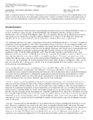
Show United States Department of the Interior National Park Service / National Register of Historic Places Registration Form NPS Form 10-900 OMB No. 1024-0018 (Expires 5/31/2012) Liberty Wells Historic District (Boundary Increase) Salt Lake County, Utah Name of Property County and State Survey Methods and Eligibility Requirements Buildings were classified as either contributing or non-contributing to the district based upon the results of a reconnaissance level survey of the Liberty Area in 2011. i Each building was evaluated for its contributory status using a set of integrity criteria (i.e., a rating system) established by the Utah State Historic Preservation Office. ii This rating system is as follows: A - Eligible/significant: built within the historical period and retains integrity; excellent example of a style or type; unaltered or only minor alterations or additions; individually eligible for the National Register under criterion "C", architectural significance; also, buildings of known historical significance. B- Eligible: built within the historical period and retains integrity; good example of a style or type, but not as well-preserved as "A"-rated buildings, though overall integrity is retained; properties may have some alterations or minor additions. C- Ineligible: built during the historical period but has had major alterations or additions; no longer retains integrity. D - Out-of-Period: constructed outside the historical period. iii Evaluations of individual buildings were based primarily on the known or estimated age of the structure and its architectural integrity (e.g., evaluations were based on physical characteristics of the buildings observable from public property, where access to the private property was not granted by the landowner). The tax assessment records for the properties were also consulted to identify/confirm probable construction dates. The assessment of historical integrity for individual buildings was carried out within the context of the collective architectural nature of the entire district. That is, over the course of the survey, it became apparent what array of material types, window types, in-period additions, and other historical characteristics were common to buildings of particular types and time periods. Buildings that deviated from these norms in terms of their modifications were given greater scrutiny relative to their historical integrity. When considering integrity and eligibility for individual architectural properties within the Liberty Area under the above rating system, several factors were taken into account, including frequency of occurrence of specific property types. For those building types and time periods that are well represented in the architectural record of the community, stricter standards for defining historical integrity are appropriate. Conversely, for those building types and time periods that are not as well-represented, more lenient standards for defining historical integrity are appropriate. Under stricter standards for defining integrity, fewer modifications of the primary historical building on a property are considered acceptable. Alterations such as enclosing or partially enclosing a porch, enclosing a carport, or converting an attached garage to additional living space, are considered unacceptable if the alteration causes the individual building to be visually distinctive from other buildings of its same type and style within the study area. Out-of-period additions are generally considered to be an adverse impact on the historical building's integrity. Under the stricter criteria, modification of the fenestration (enclosing or changing the size and shape of door and window openings) is considered a significant impact to the structure's integrity. Finally, the use of aluminum or vinyl siding is i Sara Meess. A Reconnaissance-Level Survey of the Liberty Area, Salt Lake City, Salt Lake County, Utah. Salt Lake City, UT: SWCA Environmental Consultants, 2011. ii Utah State Historic Preservation Office. Reconnaissance Level Surveys, Standard Operating Procedures. Salt Lake City: Utah State Historic Preservation Office, Rev. January 2007. iii Historical period defined as 1961 or earlier based upon 50 years from the date of the 2011 reconnaissance level survey, for the purpose of this nomination. 7 |