| OCR Text |
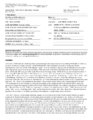
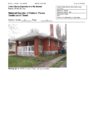
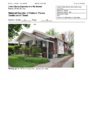
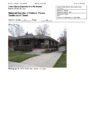
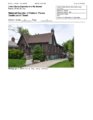
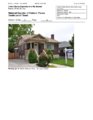
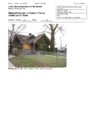
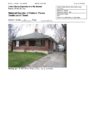
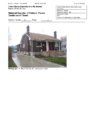
Show United States Department of the Interior National Park Service / National Register of Historic Places Registration Form NPS Form 10-900 OMB No. 1024-0018 (Expires 5/31/2012) Liberty Wells Historic District (Boundary Increase) Salt Lake County, Utah Name of Property County and State Narrative Statement of Significance (Provide at least one paragraph for each area of significance.) Initial Settlement (1871-1899) The Liberty Wells Historic District is significant under Criterion A for its association with the transition from agricultural to residential use in the former Big Field area. This transition resulted from the recognition that residential development would have to expand beyond the downtown core to accommodate Salt Lake City's growing population. During this period, the Liberty Wells Historic District was transformed by the extension of streetcar lines to the area south of 900 South and the platting of residential subdivisions in formerly agricultural areas. The physical layout of the area reflects its transition to agricultural use, as the large Big Field lots were subdivided into rectangular blocks with smaller residential lots and narrower streets. The building stock of the Liberty Wells Historic District includes Victorian, Classical, and other types of architecture from the period, representing the early residential build-out of the area. The Liberty Wells Historic District is thus historically significant at the local level for its association with community planning and development during the Initial Settlement period. Streetcar Suburbs (1900-1929) Under Criterion A, the Liberty Wells Historic District is significant for its association with suburban streetcar development in Salt Lake City. The Liberty Wells neighborhood itself is a major contributing resource in the overall history of streetcar subdivisions in the city. The incorporation of the interurban streetcar system as a necessary and integral component of the subdivision paved the way for future development of streetcar suburbs in the surrounding area (e.g., the subdivisions in the West Sugarhouse area), thereby establishing a distinctive pattern of community expansion for the southeastern portion of Salt Lake City. The Liberty Wells Historic District is thus historically significant at the local level for its association with community planning and development, as well as for its relationship to transportation, during the Streetcar Suburbs period. The Liberty Wells Historic District contains an impressive collection of Early 20th Century American residences that render the area significant under Criterion C. The residences of the Liberty and Wells areas, the majority of which are considered contributing resources within the district, are among the most well-preserved collection of early 20th century residential architecture in the Salt Lake Valley. As representative of the Early 20th Century American movement in architecture, the Liberty Wells Historic District contains an impressive collection of well-preserved bungalow, period cottage, and clipped-gable cottage residences. Collectively, buildings of these types represent approximately 552 (70 percent) of the 791 contributing properties in the Liberty Area. The housing stock in the Liberty Area exhibits several different variations of these architectural forms and the application of myriad styles to them, illustrating how they were adapted to evolving residential needs and concepts of acceptable space, functional utility, and aesthetic appeal. Furthermore, the residential architecture of the area lends a visual cohesiveness to the district, maintains continuity between the Liberty Area and the existing Wells Historic District, and distinguishes the two areas from surrounding neighborhoods to the north and west, and to a lesser extent, from the neighborhoods to the east. The district is thus historically significant at the local level for its architecture from the Streetcar Suburbs period. The Era of Infilling (1930-1945) The Liberty Wells Historic District is significant under Criterion A for its association with the decreased pace of housing construction during the Great Depression and the transition to infill development. The share of buildings constructed in the Liberty Wells Historic District between 1930 and 1945 is markedly lower than that of the Streetcar Suburbs period. This reflects the slackened pace of housing construction that resulted from the economic depression that began in 1929. The share of multiple-family dwellings constructed during this period increased, which may reflect growing demand for lower-cost housing during the depression. Construction activity that continued in the area began to occur as infill development, because much of the area was already built out. Houses from this period are more likely to appear on individual lots than as part of homogeneous subdivisions. This reflects a shift in development patterns, which were recalibrated to a built-up residential area rather than agricultural fields on the edge of the city. The Liberty Wells Historic 17 |