| OCR Text |
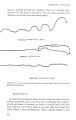
Show BARBARA TEDLOCK ing out" and the "talking about" sections in unison. The leaders will notice who does not seem to have it and will go sit next to him to explain the words. This is necessary with some of the younger men, who do not yet know much of the kokka-wan penanne, 'kachina language'. This language consists in part of the sacred words which replace ordinary words, as when 7amalasi, 'horse', replaces the ordinary word tu-si. In such cases, the ordinary word cannot be used in any religious setting, including Kachina Songs. More frequently, kachina language consists of synonyms for terms which arc themselves acceptable in religious contexts. For example, kululunanne is considered synonymous with wilolonanne, the latter being the more ordinary term for lightning; in Kachina Songs, both words are often used together in parallel constructions. Kachina language also involves the "cutting off the tips" or the "middle part" of a word. For example, in one song in my collection the phrase, le7an 7anti-heppa, 'that's what he said', is rendered le-e-e 7a tii ku'a-a-a-ha, which Zunis who know about kachina language have no trouble at all interpreting. After everyone seems to understand the words and knows how they go, the composer sings the "coming out" section three or four times until everyone joins in. Then he sings the "talking about" section three or four times until everyone has it. Next, they all start over again and sing each part a couple of times. Finally, just before they leave the kiva, they sing through the full five-part structure. The rehearsal ends with a prayer in which they ask the ancestors to help them get this song and not to forget it; then they all stand and stretch, saying, "May my corn grow ripe" and "May I kill a deer even if I don't go anywhere." After several nights of rehearsal the men will start to dance to the songs. At this time they may embellish the rhythm by adding pauses or skip beats. There are two distinct types of skip beats, 7itellup-nasanna, 'short pause,' and cu7nanne, 'sharp pause' Short pauses, which are used in all dance genres, are described by Zuni composers and dancers as "punctuation." These short pauses-which occur simultaneously in the singing, dancing, and (in dances with drums) the drumming-never occur in the middle of a word, only between words. In songs that are without linguistically meaningful texts, these short pauses arc inserted around "made-up-words." For example, in one hilili song is found hu-niwa, which "doesn't mean any- 28 |