| OCR Text |
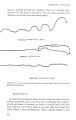
Show Songs of the Zuni Kachina Society HiU many new songs or a hilili (with its complicated rhythms and dance steps), they might rehearse almost every single night lor as I'Mig as three or foiir weeks. I "he Dance Chief and his Spokesman always arrive at the kiva i f fore anyone else. They exchange a series of formal greetings with the other men as they enter the kiva, delivering their lines with a strong final stress called 7ana k7eyalo7u peyena-we, 'raised up speech.' When most of the men have arrived, the Dance Chief will ask one of the song composers, kwap to7 icy aye?, 'What are you holding?' or 'What do you have in your hand?' If the composer has a *ong, he will sing a shortened version of it, consisting of a "coming out" section and one "talking about" section. Then he will say, 7un- «'/»w. 'Look at it,'and he may add, si7nasna-we, 'Cut some ot the meal off it,' or else tell them to break the sappohahinne, 'backbone. By this he means that the group is free to edit his song by removing *oinc of the words, "taking the meat off it," or else by changing the melcxiy, "breaking the backbone." Sometimes, a song is accepted just the way the composer sang it. More often a song is penappone, 'full of words', and the group will indeed "cut some of the meat off." Another common problem is hhat the "talking'about" section kwa7hi-nina7ma, 'doesn't match up' properly with the "coming out" section. If this is the case the Dance Chief and his Spokesman will remove the "talking about" section altogether and then make up an entirely new one using both a new melody and new words. Anyone can offer a song during a dance rehearsal and the group will try it out a couple of times: "If they don't like it, they'll move right on to the next song. They won't say anything to you about it. But the next night, if you're not there, they'll say, 'Let's put it aside, maybe we can fix it in some way'." Sometimes songs are created during the rehearsal. As one Zuni put it, "A guy could be in the corner just sowowok7e-7a ['whispering' or 'whistling'] to himself and he II get a song which he'll then sing to the group." Once the dance leaders have accepted a song, the composer is put m the center of the group and he begins to teach everyone his song. In songs that have long texts, the composer speaks (rather than ungs) the "coming out" section once; then he repeats it a second time ami the group joins in as best it can. Next, the composer si>eak.s the "talking about" section and the group says both the "com- 27 |