| OCR Text |
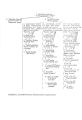
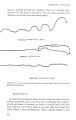
Show co7ya, literally means 'multicolored' or 'variegated'; applied to the "strong" segment, it refers both to the greater melodic range of this part of the song, which adds variety to the song as a whole, and to what Her/.og (1936:291) noted as "tonal saturation" in Kachina Songs, which here adds variety within the "strong part." The final subsection is a fixed phrase coda [zj, usually doubled [zz'J, called waya, 'cover', or ya-7ana, 'finish'; it is repeated at the end of each of the five main sections of a song. It consists primarily of vocables like 7a-ha-ha-ha, ?-i-hi-hi, ending with hiya hiya, 'Oh! Oh!'. In some genres it is identical with the fixed-phrase introduction [xj. So, in the Kachina Call genre of Kachina Dance Songs, we have the following segments or subsections within each of the three "coming out" sections: A [xx'aa'cc'zz']9 [•x] & [x'l penan kwayinan, 'talk coming out' [a] & [a'] k*ayinanne, 'the coming out' [c] & [c'l ?i?c?umme, 'the strong part' [z] & [z'] waya or ya-?ana, 'cover' or 'finish' Turning to the subsections of the "talking about" section [B], the other main part of these dance songs, we find the following overall structure: B [yybb'cc'zz'].10 Here, [yy] is a near monotone introduction on the tonic, consisting of hapi-me hapi-me. The next two parts of each "talking about" section [B], also called "talking about" [bb'], replace the text [aa'l of the "coming out" section [A]. Then come two sections [cc'l which are the "strong parts." These are identical with the previously discussed "strong part" of the "coming out" section or [A]. Finally comes the coda [zz'l, which is also the same as in the "coming out" section [A]. The completed structure of a song of the Kachina Call type is as follows: A [xx'aa'cc'zz'] A [xx'aa'cc'zz'] B [yy bb'cc'zz'] B [yy bb'cc'zz'] A [xx'aa'cc'zz'] The last "coming out" section of the entire song [A] is also called pdltonne, 'to cover it over with' or 'to finish with'. In the Kachina 18 |