| OCR Text |
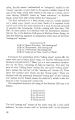
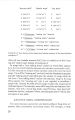
Show So/i#.s (S\ TTCZ znnu south, which the Yellow Corn Girls, who live in the north, face. Deer Village Mountain is the sacred mountain of the east, located near Grants, which the Blue Corn Girls of the west face. The Yellow Corn Girls are mentioned first, then the Blue Corn Girls, and these arc contiguous directions, north then west, on a counterclockwise circuit of the four directions. Likewise the tirst mountain was Salt Lake Mountain of the south, followed by Deer Village Mountain of the east. The [a] and [a'] subsections of the first "coming out" section also provide song titles. Titling is especially difficult in the Kachina Call genre, which has by far the largest song corpus (it is the most frequently performed dance genre). The Downy Feather on a String Song discussed above could be titled either Salt Lake Mountain or Deer Village Mountain but not Yellow or Blue Corn Girls. The reason for this is that the thunder and lightning located on these two mountains develop, in the "talking about" section, into rain and then a flood, whereas the Yellow and Blue Corn Girls are merely the audience, so to speak, of the events of the song. The subsections [a] or [a'] always end with li-hunm, a word which is composed of li-la, 'here', plus mm, a nonmeaningful continuant. This is'also the last word of the analogous part of the "talking about" segment [b] (see below). Since song texts in this genre tell of distant events-for instance, thunder, lightning, and rain- which are coming to Zuni, it seems appropriate to end each verse with li-hunm, 'herc-mni'. The fifth and sixth parts within each "coming out" section arc the 7i?c?umme, 'to make it strong', parts of the song, [c] and | c ' | . They both occur five times within a given song, always in the fifth and sixth subsection of both the "coming out" and the "talking about" sections. They can consist of a new melody of one or more lines (in which one word may change in [c'l, plus a line or two of vocables and emotional or affective interjections, such as, ?elu, 'joy!', 'happiness!',- and hiya and naya, which indicate surprise. These interjections often occur together, hiya ?elu or ndya ?elu, and could be translated in English as 'Oh joy!' or 'Oh happiness!'. The "strong part" is the segment of the song which Zunis find the most beautiful, because "this is the part where they're really singing." This part is higher and louder and has a more complex melodic contour than anything else in a given section. The Zuni term for 'beautiful', 17 |