| OCR Text |
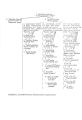
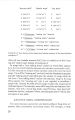
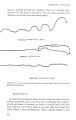
Show Call genre, this is the section where the song reaches the highest pitches, the tonic having been raised in the second [A] (optional) and raised still higher in the final [A] (mandatory). See figure 2.3 for a Zuni drawing of a melody of this genre, which shows the last "coming out" section, also called "finishing" section, the highest part, by far, of the song. The subsection which is considered the most beautiful is the last "strong part" [c'J of the "finishing" section. The Log Drum genre, which includes nine masked dances, has the most complex rhythmic structure of all Zuni songs, but is melodically and tcxtually rather simple compared with the Kachina Call genre. There is no separate ?i?c?umme, 'strong', section lec']; thus the term kwayinanne need not be applied on two different levels, as in the case of the Kachina Call genre. Instead, in Log Drum Songs [A] consists simply of [aa'l (plus the usual introduction and coda) and in [B], a new melody is simply added onto the front of the "coming out" section resulting in [bb'aa']. The term silnanne, 'coming out', can be applied to [B] as a whole or to [bb'J, but this genre lacks a "true coming out" section. In Comanche Songs, what would be the hapi-me [y] (see the Kachina Call discussion) used to introduce the "talking about" section [bb'l is, instead, imbedded in the first line of both [b] and [b'l as follows: wi ya hapi-me yay he /o wi ya he ne ya. The Bundle Drum genre, including 10 Kachina Dances which use either the tese??ananne, 'bundle drum', or the te?pelnuinc, 'pottery drum', shows a third way to construct IB]. Some Bundle Drum Songs use the full Kachina Call pattern with a "true talking about" section, but others omit this section [bb'l altogether so that in sections three and four there remains only a "strong part" [cc'J. See figure 2.2 for comparisons of the Kachina Call, Bundle Drum, and Log Drum structures (with introductions and codas left out for the sake of simplicity). Given that all Kachina Dance Songs must have five parts with the overall structure A A B B A, in which [B] must be different from [A], the patterns of the three genres exhaust all the possibilities of variation for [B]. In the Kachina Call genre, the "coming out" part [aa'] is replaced with completely new textual and melodic material 11)1)']. Bundle Drum genre song construction, however, involves the removal of the "coming out" section [aa'] without adding anything. 'Hie Log Drum genre, like the Kachina Call genre, involves the ad- 19 |