| OCR Text |
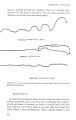
Show BARBARA TKDLOCK Not only the text but the melody differs for the two main song parts, as has been described by Herzog (1936:291-92). The fit of text and melody is one of the major problems that Zuni composers face. When they are dissatisfied, they say, in Zuni, kua?hi-nind?ma, 'it doesn't match', or in English, "It's bumpy not straight," by which it is meant that the words arc not properly adjusted to the melody. II. II. Roberts (1923:179) noted this problem in her sample of three Child Coming Out Kachina Songs, in which the text "may cause a slight accent to fall where normally none would appear in the tunc." In the Kachina Call genre, the song structure, both textually and mclodically, reaches the highest level of complexity within all Kachina Dance Songs. Here, each of the five main parts of the song is divided into four, paired, smaller parts. Other Kachina Dance Songs, as well, are divided into smaller subsections within the five-part overall structure, but the Kachina Call genre is by far the most complex and will therefore serve as the main example in the case of these finer distinctions. Within each "coming out" section in all Kachina Dance Songs, there is a fixed-phrase introduction [x] sung twice, either identically [xx] or with a slight variation [xx']. It is called penan kwayinanne, 'talk coming out'. In the Kachina Call genre both the Downy Feather on a String and the Red Beard Songs begin with ho-ho-ho he-he-he, while the Good Kachina and Painted Red begin with ?a-ha ?e-he ?a-ha ?e-he. This introduction immediately identifies a song for Zunis and tells them both "how far down it'll go" (the tonic) and "what beat it's got." This is a necessary part of all Kachina Songs, and Zunis can readily sing it, out of context, for each genre. The next two parts of each "coming out" section within the Kachina Call genre each consist of a four-line song text, also called a "coming out" [a], which is repeated either identically [a] or with a one or two-word alteration [a']. The word or words altered are the names of religious persons, places, or things. They are replaced with other persons, places, or things which are contiguous with them in directional associations. For instance, in one Downy Feather on a String Song, the [a] subsection mentions thunder and lightning on Salt Lake Mountain, which the Yellow Corn Girls see and hear. In the [a'] subsection, the thunder and lightning is on Deer Village Mountain and the Blue Corn Girls see and hear it. Salt Lake Mountain, located near the Zuni Salt Lake, is the sacred mountain of the 16 |