| OCR Text |
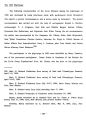
Show unusual that the most sacred of Zuni sacred areas should be the mouth of the Zuni River, and that all of the springs along the river should be especially sacred. In 1906 Walter Hough described some of the beliefs of the Zunis in regard to 27 springs. The Zuni also believes that the sacred springs are used for the gods to look through to the upper world, and the Spanish word ojo, which is part of so many names of springs in the southwest, would corroborate this statement, and has probably the same significance.... It may be pointed out in this connection that the history myth of the Zuni is in large measure a recounting of the springs at which they halted in their wanderings from the earth navel whence they issued, to the traditional center of the world where they now live.... The Zuni River and the sacred trail that meanders near it, pass a series of sacred springs to Kolhu/wala:wa are described in importance by Ladd.28 The Zuni River is the spiritual lifeline of the Zuni people. Nearly every aspect of the religious system is in some way tied to the river. Along its banks and in the stream, offerings are made to the gods and to the ancestral spirits for continuous protection, spiritual guidance, and long life. In times past, the river was the absolute source that gave life; it provided drinking water for the people and the animals as well as water for the plants, which man and beast depended on for life in this high, dry plateau country. The Zuni believe that the spirit returns upon death to the place where this muddy little stream converges with the Little Colorado River, northwest of the town of Saint Johns, Arizona. The place is called ko/lhu /wa/a la:wa-"there to become one of the ancestors." The ancestors are said to return to itiwann/a-Zuni-by making their way back up the Zuni River in the form of ducks whenever the masked dances are performed. They also return in the form of rain 27. Hough, Walter "Sacred Springs in the Southwest," Records of the Past, Vol. V, Part VI (June, 1906), pp. 163-169. 28. Ladd, 1983, og. cit., , p. 31. - 20 - |