| OCR Text |
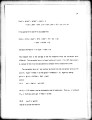
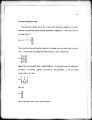
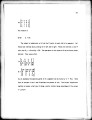
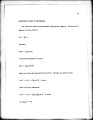
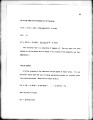
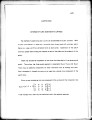
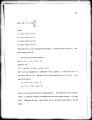
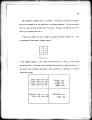
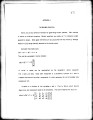
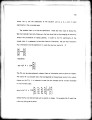
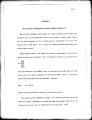
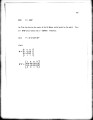
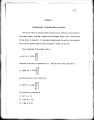
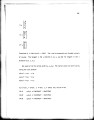
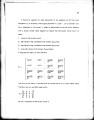
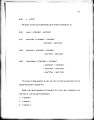
Show I 66 It should be apparent on close examination of the equations A1-A3 that each component is, as asserted, a fifth ctgres polynomial in u and v. Let us consider only the x component of the normal. In order to approximate the normal vector equation with a bicubic normal vector equation we require that the bicubic normal have the same: 1. values at the corners, xn(u,v) 2. derivatives in the u direction at the corners, dxn(u,v)/du 3. derivatives in the v direction at the corners, dxn(u,v)/dv 4. cross derivatives at the corners, d7xn(u,v)/dudv. If we group this data in a matrix we have: Px - Xn(0,0) x„(l,0) dxn(0,0) du dxn(l,0) du Xn(0,l) dxn(0,0) dv xn(l.l) dxn(l,0) dv dxn{0,l) d?xn(0,0) dv dudv dxft(i,l) d'xn(l,0) du dudv dxn(0,l) dv dxn(l,l) dv d7xn(0,l) dudv d?xn(l,l) dudv The form of this matrix is the same form as the data matrix for a bicubic Coons patch. Therefore we can use Coons magic matrix: C - 2-211 -3 3 -2 -1 0 0 10 10 0 0, So the x component of the bicubic normal is: ■ .^^a-Mnam |